
Table of Contents
- What Nervous System Regulation Actually Means
- How Heat Therapy and Nervous System Regulation Work Together
- Cold Plunge and the Stress Response: What Cold Water Immersion Does
- Cold Water Immersion Safety and Who Should Avoid It
- How Long to Stay in a Cold Plunge: Dose, Timing and Acclimation
- Contrast Therapy Benefits: Alternating Heat and Cold
- Heat, Cold or Both? Choosing What Fits Your Nervous System
- Frequently Asked Questions
Last Updated: October 21, 2026
What Nervous System Regulation Actually Means
Nervous system regulation is the body’s ability to shift between states of alertness and calm without getting stuck in either, and it is the single clearest way to judge whether thermal therapy vs cold plunge for nervous system regulation is worth your time.
At Harmony Hill Health Retreat, we frame this in practical terms for leaders arriving in a state of chronic overload. Measurable markers include heart rate variability, resting heart rate, blood pressure and sleep quality. A rising heart-rate variability trend generally signals better parasympathetic tone.
The point most guides miss: you cannot regulate a nervous system you never challenge. Heat and cold are controlled stressors. Each one pushes the body, then lets it recover, and the recovery is where the training happens.
Regulation is not permanent calm. It is flexibility, the capacity to move from stress back to baseline quickly and reliably.
How Heat Therapy and Nervous System Regulation Work Together
Heat exposure works on the nervous system through circulation, the relaxation response and a controlled rise in core temperature. Sitting in a sauna, steam room or hot bath dilates blood vessels, lowers blood pressure and eases muscular tension.
The mechanism is often described as neurohormesis: a moderate stressor that triggers adaptation. Heat stress prompts the body to improve thermoregulation and cardiovascular efficiency. Over repeated sessions, this can build stress tolerance and resilience rather than deplete it.
What matters for regulation is the cooldown. A sauna followed by quiet rest, hydration and slow breathing gives the parasympathetic system room to take over. Skip that and you get heat stress without the payoff.
What the evidence supports, and how strongly
- Circulation and blood pressure: reasonably consistent short-term reductions in blood pressure after sauna use, especially in people with elevated baseline readings. Effect size is modest.
- Sleep onset: commonly reported and plausible via the post-heat temperature drop, but studied mostly in small samples and self-report.
- Muscle soreness: modest support for heat as a recovery aid, weaker than the evidence for cold in acute recovery.
- Heart-rate variability: some studies show improvement with consistent sauna practice, but protocols vary widely and lasting effects are not well established.
- Mood and mental health: promising but preliminary; heat is not a treatment for anxiety or depression on its own.
Dose and timing that practitioners commonly use
-
Temperature: a traditional dry sauna typically runs around 70-90°C; steam rooms sit lower in temperature but higher in humidity, which changes tolerance.
-
Duration: most sessions run 10-20 minutes, often split into two or three rounds with a rest between.
-
Frequency: two to four sessions per week is a common starting point; daily use is tolerated by many but not necessary.
-
Timing: late afternoon or early evening suits people using heat to wind down; morning heat can leave some people sluggish.
-
Best for: general relaxation, circulation, muscle soreness and sleep onset
-
Watch: dehydration, dizziness on standing, and overheating. Drink water before and after, and stand up slowly.
-
Real limitation: heat is gentle. It rarely produces the sharp, measurable reset that cold does, and the evidence for lasting nervous-system change is weaker than the marketing suggests.
Heat is a slow lever. It nudges the nervous system toward parasympathetic dominance through circulation and the cooldown, but it rewards consistency and patience more than intensity.
Cold Plunge and the Stress Response: What Cold Water Immersion Does
Cold-water immersion is deliberate exposure to cold water, typically a cold plunge or ice bath, used to trigger a controlled stress response.
The value sits in what follows. Learning to slow your breathing through the shock teaches the body to stay composed under pressure. Practitioners describe this as building stress tolerance, and it translates directly to high-stakes rooms. Endorphins rise, alertness sharpens, and mood often lifts.
Cold also affects circulation and inflammation, and many athletes use it for exercise recovery and muscle soreness. The evidence on inflammation and immune response is promising but not settled, so treat strong claims with caution.
Never enter cold water alone if you are new to it. Cold shock can cause involuntary gasping and rapid heart rate. Enter slowly, keep your head above water, and get out if you feel faint.
Cold Water Immersion Safety and Who Should Avoid It
Cold water immersion safety starts with knowing who should not do it. People with heart conditions, uncontrolled high blood pressure, circulation disorders, or who are pregnant should speak to a doctor first. The cold shock response places real demand on the cardiovascular system.
Practical rules we would give any guest:
- Never plunge alone, especially in open water
- Keep sessions short and build up gradually
- Breathe slowly and deliberately through the initial shock
- Exit if you feel dizzy, numb or disoriented
- Avoid cold exposure immediately after intense exercise if you are new to it
Cold plunge is not a cure for trauma or mental health conditions. It is a tool that some people find useful alongside professional care. If you have a diagnosed condition, individualised guidance from a qualified practitioner is the sensible starting point.
How Long to Stay in a Cold Plunge: Dose, Timing and Acclimation
How long to stay in a cold plunge depends on experience, water temperature and your goal, but shorter is almost always smarter at the start. Beginners often do well with brief exposures of a minute or less, then build gradually over weeks.
Acclimation is the real skill. Repeated short sessions train thermoregulation and reduce the shock response, which is why experienced plungers look calm while newcomers gasp. Timing matters too: some people plunge in the morning for alertness, others after exercise for recovery. Avoid cold exposure close to bedtime if it leaves you wired.
| Experience Level | Typical Exposure | Frequency | Focus |
|---|---|---|---|
| Beginner | Under 1 minute | 2-3 times weekly | Breathing control |
| Intermediate | 1-3 minutes | 3-4 times weekly | Acclimation |
| Experienced | 3-5 minutes | Daily or near-daily | Stress tolerance |
| Recovery goal | 1-2 minutes | After training | Circulation |
The best gauge is your breathing, not the clock. If you can slow your breath and stay composed, the dose is right. If you are gasping and panicking, shorten it.
Contrast Therapy Benefits: Alternating Heat and Cold
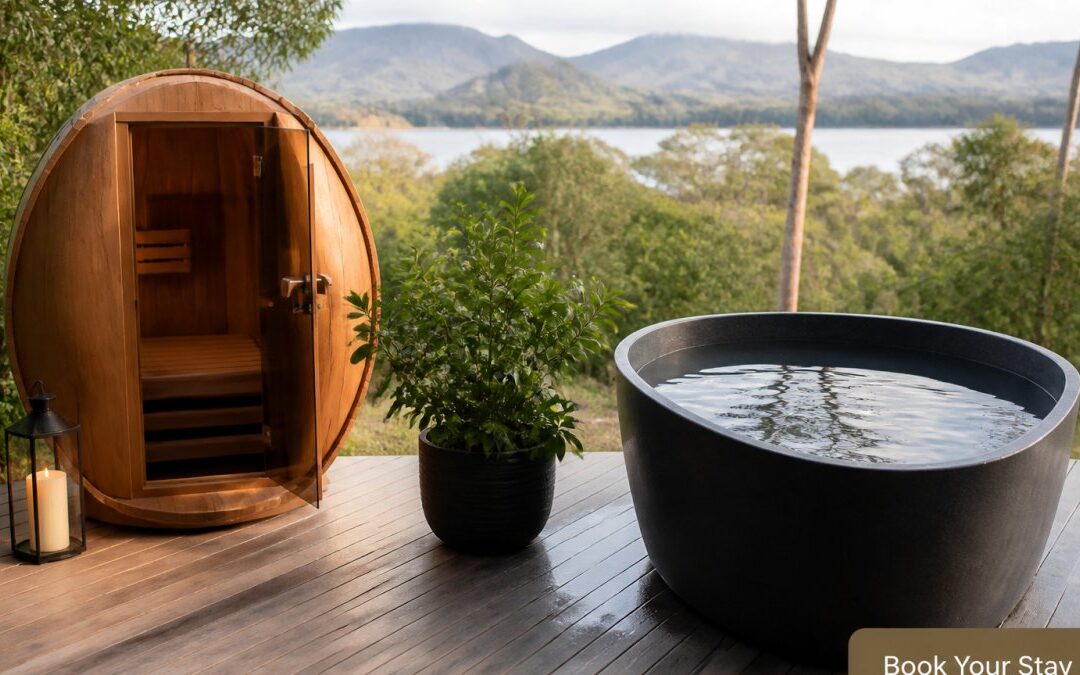
Contrast therapy benefits come from alternating heat and cold, and it is the approach we favour for nervous system regulation. Moving between sauna and cold plunge repeatedly exercises both branches of the autonomic nervous system: heat opens and relaxes, cold sharpens and constricts. The swing trains flexibility, not just calm.
The circulation effect is notable. Blood vessels dilate in heat and constrict in cold, which many people find eases muscle soreness and speeds recovery. Heart-rate variability often improves with consistent practice, a sign of better parasympathetic activity.
A simple rhythm: several minutes of heat, a short cold plunge, then rest and repeat a few rounds. Finish on the heat if you want to wind down, or on the cold if you want alertness.
peer-reviewed research on cold-water immersion and the stress response
Heat, Cold or Both? Choosing What Fits Your Nervous System
Choosing between heat, cold or both comes down to your goal, your body and your tolerance for discomfort.
Start with your goal
- If you are wired, tense or struggling to switch off: heat first. Sauna or a hot bath, followed by a proper cooldown, nudges you toward parasympathetic dominance.
- If you feel flat, foggy or want to train composure under pressure: cold first. The cold shock response is a controlled stressor that teaches breathing control and stress tolerance.
- If you want the broadest regulation effect: contrast therapy. Alternating heat and cold exercises both branches of the autonomic nervous system and is the approach we favour.
- If you are unsure or have a health condition: neither, yet. Get medical advice before you start.
Then check your health status
Cold water immersion carries more cardiovascular demand than heat for most people, because the cold shock response causes an involuntary gasp and a rapid heart-rate spike.
Speak to a doctor first if you have any of the following:
- A heart condition or a history of cardiac events
- Uncontrolled high or low blood pressure
- A circulation disorder or Raynaud’s phenomenon
- You are pregnant
- You take medication that affects blood pressure, heart rate or fluid balance
- You have a history of panic attacks or trauma responses to cold
Then match the format to your response
A useful test is how you feel 30 minutes after a session, not during it.
What the evidence says about the comparison
The evidence base is uneven. Cold-water immersion has more research behind it for acute stress response, alertness and recovery, but much of it is small, short-term and in young, healthy populations.
- Choose heat if you are depleted, tense or struggling to switch off
- Choose cold if you feel flat, foggy or want to train composure under pressure
- Choose both if you want the broadest regulation effect and can commit to the routine
- Choose neither, yet if you have a cardiovascular condition or are unsure. Get medical advice first.
For leaders carrying chronic fatigue and burnout, a structured, supervised approach beats a sporadic one. If you want to compare formats, you can read guidance on sauna and heat exposure safety before you commit.
We have helped over 500 leaders reset, and the pattern is consistent: the people who get lasting results treat heat and cold as a practice, not a one-off.
Better Health Channel guidance on heat and cold therapy
If you only do one thing, do the cooldown properly. Ten minutes of quiet rest and slow breathing after either heat or cold is where most of the regulatory benefit is consolidated.
[CTA: Book Your Stay]
Frequently Asked Questions
Is heat or cold better for nervous system regulation?
Neither wins outright. Heat exposure tends to support relaxation by encouraging parasympathetic activity, which can help with calm and sleep quality. Cold-water immersion triggers the sympathetic nervous system through the cold shock response, then often leaves people feeling more alert and resilient afterwards. The better choice depends on your goal: wind-down and recovery suit heat, while alertness and stress tolerance suit cold. Many people use both through contrast therapy. Anyone with cardiovascular conditions should check with a doctor first.
Does a cold plunge help regulate your nervous system?
A cold plunge creates a controlled stressor. The cold shock response raises heart rate and breathing briefly, then the body adapts. Over repeated sessions, this can build stress tolerance and improve how you cope with daily pressure. Some people report better mood and alertness afterwards. It is not a fix for an overstimulated nervous system on its own, and how long to stay in a cold plunge matters. Short, controlled exposures with steady breathing work better than long, uncomfortable ones.
Who should avoid cold-water immersion or heat therapy?
Cold water immersion safety is not universal. People with heart conditions, uncontrolled high blood pressure, circulation problems, or those who are pregnant should speak to a doctor before trying it. Heat therapy carries similar cautions, particularly for anyone with cardiovascular disease or heat sensitivity. Never combine either with alcohol. If you feel dizzy, faint or short of breath, stop immediately. In a supervised retreat setting, trained staff can screen guests and adjust exposure duration and temperature to suit individual needs.
Can contrast therapy support relaxation and stress management?
Contrast therapy benefits come from alternating heat and cold, which challenges the circulatory system and the nervous system in sequence. Heat encourages relaxation and blood flow, while cold prompts alertness and circulation changes. The back-and-forth can leave people feeling both calm and refreshed. It is often used for exercise recovery and muscle soreness. Start with short rounds and build gradually. If you have any cardiovascular concerns, get medical clearance before trying contrast therapy, and always finish with a neutral or warm phase if you feel chilled.
Chronic stress does not switch off because you took a weekend off. It eases when you give your nervous system repeated, structured practice at moving between stress and calm. Harmony Hill Health Retreat offers a private, six-day Thermal Therapy Retreat for two to three guests at a time, blending heat, cold and ancient Egyptian wisdom so you can step out of survival mode and back into vitality. Explore our retreat packages and book your stay to begin.