
Table of Contents
- How Thermal Therapy Reduces Stress at the Physiological Level
- Infrared Sauna Benefits for Mental Health and Mood
- How Long to Stay in a Sauna for Stress Relief
- Thermal Therapy for Inflammation and Joint Mobility
- Heat Therapy Safety Guidelines Australia
- Why Thermal Therapy Works Differently Than Weekend Breaks
- Conclusion
Last Updated: August 6, 2026
How Thermal Therapy Reduces Stress at the Physiological Level
When your nervous system is locked in high alert, thermal therapy triggers a cascade of physiological changes that reset your body’s stress response. Heat exposure activates your parasympathetic nervous system, the biological switch that tells your body it’s safe to rest.

When you expose your body to controlled heat, your core temperature rises, triggering vasodilation, the widening of blood vessels that improves circulation. This increased blood flow delivers oxygen and nutrients more efficiently to muscles and organs while removing metabolic waste products that accumulate during chronic stress.
Vasodilation and improved circulation
When blood vessels expand in response to heat, your cardiovascular system enters a more relaxed state. Heart rate variability improves, meaning your heart rhythm becomes more adaptive and responsive, a hallmark of better stress resilience. This reduced vascular resistance lowers blood pressure and decreases the physical strain that chronic stress places on your cardiovascular system. Many people experiencing burnout have elevated resting heart rates and poor heart-rate variability, both markers of nervous system dysregulation. Thermal therapy directly addresses this by retraining your circulatory system toward a more relaxed baseline.
Cortisol regulation and nervous system reset
Chronic stress disrupts your cortisol rhythm, often leaving this primary stress hormone elevated when it should be dropping in the evening. This is why high-pressure leaders frequently struggle with sleep disruption and daytime fatigue.
Thermal therapy interrupts this pattern. Heat exposure activates the parasympathetic branch of your autonomic nervous system, which directly suppresses cortisol production. The thermal stress your body experiences during sauna use is controlled and predictable, unlike workplace stress. This allows your nervous system to practise the relaxation response in a safe environment. Over repeated exposures, your body becomes more efficient at downregulating stress hormones even when you return to high-pressure situations.
Infrared Sauna Benefits for Mental Health and Mood
Infrared sauna benefits for mental health extend far beyond physical relaxation. The psychological shift that occurs during thermal therapy sessions addresses the emotional exhaustion that defines executive burnout.
Serotonin release and endorphin production
Heat exposure triggers the release of serotonin, the neurotransmitter responsible for mood stabilisation and emotional resilience. People experiencing chronic stress often have depleted serotonin levels, contributing to emotional flatness and irritability. Thermal therapy stimulates serotonin production directly through heat-induced physiological changes.
Endorphin production also increases during thermal therapy. These natural pain-relieving and mood-elevating compounds combine with elevated serotonin to create a measurable shift in how you feel, not just during the session but for hours afterward. This mood elevation is distinct from other wellness activities, it’s not dependent on motivation or willpower. Your brain chemistry shifts in response to the heat stimulus, providing relief that feels both immediate and sustainable.
Sleep quality and recovery optimisation
Sleep disruption is one of the most damaging effects of chronic stress and is notoriously resistant to conventional interventions. Thermal therapy optimises sleep through multiple mechanisms. The drop in core body temperature that follows heat exposure signals your body that it’s time to sleep, mirroring the natural circadian rhythm disrupted by stress and irregular schedules. Additionally, the parasympathetic activation during thermal therapy carries into the evening, creating the neurological conditions for deeper, more restorative sleep.
Many executives report that thermal therapy produces the first genuinely restorative sleep they’ve experienced in months or years. Better sleep then amplifies all other recovery processes, creating a positive feedback loop where each night’s improved rest makes the next day’s stress response more resilient.
How Long to Stay in a Sauna for Stress Relief
Research into thermal stress protocols suggests that 15-20 minutes per session is the optimal window for stress reduction without excessive physical strain. The ideal duration depends on your current stress load and physical conditioning.
The key principle is consistency over duration. Three sessions of 15 minutes per week produces more reliable stress reduction than one 45-minute session. Your nervous system adapts to repeated, moderate thermal exposure more effectively than it responds to occasional intense heat stress.
Temperature matters as much as duration. Lower temperatures (45-50°C) allow for longer sessions and are more suitable for stress management, whilst higher temperatures (65-80°C) require shorter exposures but produce more intense physiological activation. For leaders managing chronic stress, the lower-temperature, longer-duration approach is typically more sustainable and effective.
Thermal Therapy for Inflammation and Joint Mobility
Chronic psychological stress triggers systemic inflammatory responses. Understanding this mechanism reveals why thermal therapy’s anti-inflammatory effect is distinct from its nervous system benefits, and why it matters for stress management.
How chronic stress drives systemic inflammation
When your nervous system remains in a sympathetic-dominant state (fight-or-flight mode) for weeks or months, your immune system shifts into a pro-inflammatory state. Elevated cortisol and adrenaline suppress anti-inflammatory cytokines while promoting pro-inflammatory ones like TNF-α and IL-6. This systemic, persistent inflammation affects your joints, connective tissues, gut lining, and brain, driving joint stiffness, digestive issues, brain fog, and poor wound healing, all from the same underlying inflammatory state.
Thermal stress as an anti-inflammatory trigger
Heat exposure activates a counterintuitive mechanism: it triggers a controlled stress response that paradoxically reduces chronic inflammation. When you enter a sauna, your core temperature rises by 1-2°C, activating heat shock proteins (HSPs), particularly HSP70 and HSP90, which are powerful anti-inflammatory molecules. These suppress NF-κB, a key inflammatory signalling pathway, and reduce oxidative stress. This is why thermal therapy produces measurable reductions in inflammatory markers like C-reactive protein (CRP) and TNF-α.
Thermal therapy doesn’t just feel relaxing; it biochemically shifts your immune system from a pro-inflammatory to an anti-inflammatory state. This is why regular sauna users often report that chronic pain, joint stiffness, and general body tension resolve, not because heat physically loosens tissues, but because the inflammatory environment driving the pain has shifted.
Joint mobility and connective tissue adaptation
Once the inflammatory state begins to resolve, mechanical benefits follow. Heat increases collagen extensibility and reduces viscosity in synovial fluid, allowing your joints to move more freely and with less discomfort. For desk-bound professionals, neck stiffness, lower back tension, and shoulder immobility that develop during months of high-stress work gradually resolve. Regular thermal therapy (2-3 sessions per week) produces measurable improvements in joint flexibility within 4-6 weeks, particularly in the spine, hips, and shoulders.
Oxidative stress reduction and cellular recovery
Chronic stress generates reactive oxygen species (ROS) that damage cell membranes, proteins, and DNA. Heat exposure activates antioxidant defence systems, including superoxide dismutase (SOD) and catalase, which neutralise ROS. This is why thermal therapy produces a sense of physical renewal that goes beyond temporary relaxation. Your cells are actually recovering from the oxidative damage of sustained stress. Over weeks of regular sessions, this accumulates into measurable improvements in energy, physical resilience, and recovery speed.
Heat Therapy Safety Guidelines Australia
While thermal therapy is generally safe for stress management, certain conditions and medications require medical clearance before beginning. Australia’s Therapeutic Goods Administration (TGA) classifies therapeutic heat devices and infrared saunas as medical devices if they make therapeutic claims.
Consult a healthcare provider before starting thermal therapy if you have:
- Cardiovascular conditions: Uncontrolled hypertension, acute heart disease, or severe arrhythmias. Heat causes vasodilation and increases cardiac workload.
- Pregnancy: Core body temperature elevation during the first trimester poses theoretical risks to fetal development.
- Acute infections or fever: Heat exposure during active infection can impair immune response and increase dehydration risk.
- Medications affecting thermoregulation: Certain antipsychotics, anticholinergics, and some antidepressants reduce your body’s ability to cool itself.
Mental health contraindications: A critical gap
Heat therapy can be counterproductive for specific stress-related and mental health conditions. People with post-traumatic stress disorder (PTSD) or panic disorder sometimes experience heat exposure as a trigger for dissociation or panic symptoms. The physical sensations of rising core temperature, increased heart rate, and perspiration can mimic panic attack symptoms. For these individuals, gradual, low-temperature exposure (starting at 40-45°C for 5-8 minutes) under professional supervision is necessary.
Individuals with high sensory processing sensitivity may find sauna environments overwhelming due to heat intensity, humidity, and enclosed spaces. Gentler thermal modalities, such as warm baths (37-40°C) or heated blankets, may deliver stress benefits without sensory overload. If you have bipolar disorder, thermal therapy should be discussed with your psychiatrist before beginning, as some practitioners report it can trigger or accelerate manic episodes.
Hydration and electrolyte balance
Heat exposure increases fluid loss through perspiration, and dehydration amplifies cortisol and adrenaline production. Drink 250-500 mL of water before a session and another 250-500 mL afterward. For sessions longer than 20 minutes or in high temperatures (above 70°C), consider an electrolyte drink to replace sodium and potassium lost through sweat.
Gradual adaptation protocol
Your body’s heat tolerance improves over 2-3 weeks of regular exposure. Begin with shorter sessions (10 minutes) at lower temperatures (45-50°C) and progress gradually. If you experience dizziness, chest discomfort, or unusual anxiety during or after sessions, stop and seek medical advice.
Why Thermal Therapy Works Differently Than Weekend Breaks
A weekend away feels good temporarily, but it doesn’t rewire your nervous system’s baseline stress response. You return to the same high-pressure environment with the same dysregulated nervous system. The stress returns within days.
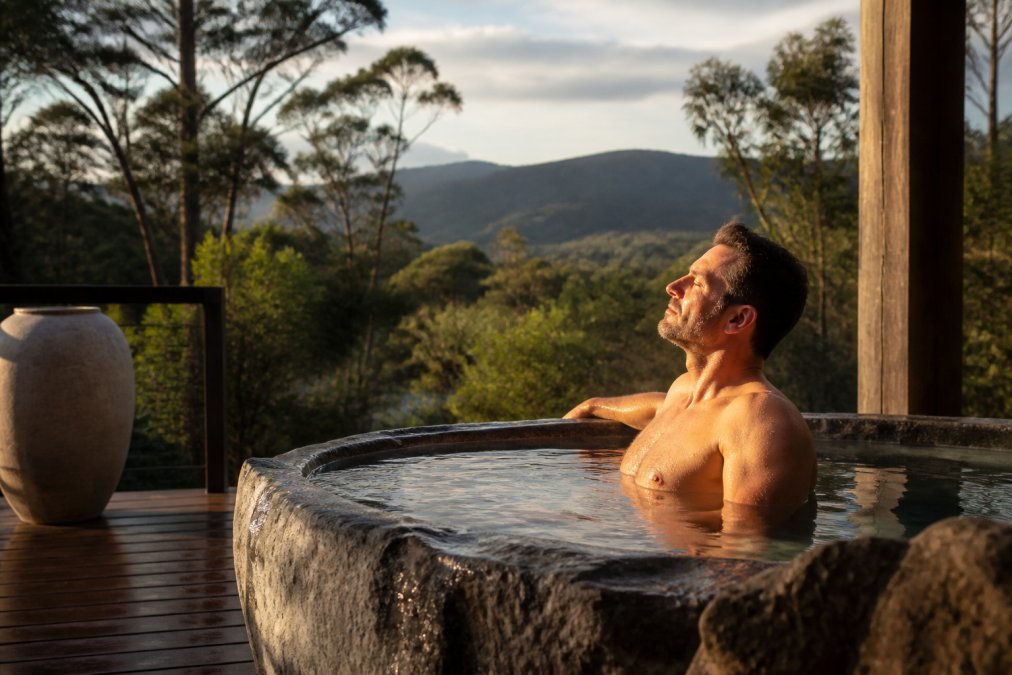
Thermal therapy operates on a different principle entirely. It’s not about escape; it’s about nervous system recalibration. Each session teaches your parasympathetic nervous system how to activate more readily and more deeply. Over time, this changes your baseline stress response. You don’t just feel better during the retreat; you return to work with a genuinely altered nervous system.
The difference is biological, not psychological. Thermal therapy triggers sustained physiological changes, improved heart-rate variability, reduced cortisol baseline, enhanced serotonin production, that persist long after the heat exposure ends. This is why intensive thermal therapy programs, like the 6-day retreats offered at Harmony Hill Health Retreat, produce lasting transformation. Six consecutive days of thermal therapy allows your nervous system to establish new patterns of regulation that become your new normal.
The exclusivity of intensive retreat experiences also matters. When you’re one of only two or three guests, there’s no performance pressure or social hierarchy to navigate. Your nervous system can genuinely relax rather than remaining in subtle alert mode. This depth of relaxation is what allows the neurological rewiring that weekend breaks cannot achieve. Many leaders arrive at Harmony Hill Health Retreat sceptical about whether six days can actually change anything. What they discover is that six consecutive days of thermal therapy, combined with the sanctuary environment and absence of external demands, produces nervous system reset that weekend breaks never touch.
Frequently Asked Questions
Is heat therapy actually effective for managing anxiety and stress, or is it just marketing?
Heat therapy works through measurable physiological changes: it activates vasodilation (widening of blood vessels), increases blood flow, and triggers the release of serotonin and endorphins. These neurochemical shifts reduce cortisol levels and calm the autonomic nervous system. The effects are real, not placebo, though consistency matters. A single session provides temporary relief; sustained thermal therapy protocols (like a structured 6-day retreat) create lasting nervous system recalibration that executives report persists weeks after returning home.
How long should I stay in a sauna for stress relief to see real benefits?
Most people experience acute stress reduction within 15-20 minutes of thermal exposure. For deeper benefits, improved sleep quality, sustained mood elevation, and inflammation reduction, sessions of 20-30 minutes, two to three times weekly, show the strongest results. Beginners should start at 10-15 minutes and build tolerance gradually. In a structured retreat setting, longer immersion periods combined with recovery protocols and guided relaxation amplify the effect beyond what occasional home use can achieve.
What are the safety concerns with thermal therapy, and what guidelines apply in Australia?
Safe thermal therapy requires monitoring of core body temperature, adequate hydration, and awareness of contraindications (pregnancy, uncontrolled hypertension, certain cardiac conditions). In Australia, thermal facilities should comply with relevant workplace health and safety standards and Australian Standards for sauna design and operation. Always consult a GP before beginning thermal therapy, especially if you have existing health conditions or take medications. Reputable retreat providers follow established protocols: gradual temperature exposure, cool-down periods, medical screening, and staff supervision.
Why is a structured thermal therapy retreat more effective than using a sauna at home or a weekend spa visit?
A dedicated retreat removes the stressors that undermine healing: work demands, digital connectivity, and fragmented routines. Over six days, your nervous system fully downregulates, something that cannot happen in a weekend. Structured thermal protocols, combined with sleep optimisation, guided relaxation, and removal from your high-pressure environment, create conditions for cellular repair and lasting neurological reset. The exclusivity and bespoke approach ensure personalised dosing and psychological safety, which amplifies both immediate and sustained stress-reduction outcomes.
The question isn’t whether thermal therapy works for stress, the physiology is clear. The question is whether you’re willing to invest in genuine nervous system recalibration rather than temporary relief. Book a consultation with Harmony Hill Health Retreat to explore how a bespoke 6-day thermal therapy program can reset your nervous system and restore the vitality that chronic stress has eroded.
This article was written using GrandRanker