Table of Contents
- Understanding the Two Retreats
- Private Health Retreat Australia No Group Classes: The Harmony Hill Model
- Elysia’s Approach: Community and Personalisation
- 1-on-1 Executive Burnout Retreat Without Group Yoga: Total Solitude vs Shared Healing
- Accommodation, Meals, and Daily Structure
- Wellness Therapies and Healing Methodologies
- Which Retreat Is Right for You?
- Frequently Asked Questions
Last Updated: September 3, 2026
Understanding the Two Retreats
When burnout leaves you depleted, a weekend spa trip won’t suffice. You need deeper transformation. Two of Australia’s most compelling wellness options sit at opposite ends of the spectrum: Elysia Wellness Retreat in the Hunter Valley and Harmony Hill Health Retreat in Tasmania. Both promise transformation, but deliver it differently.
The core question: do you want community and guided exploration, or complete solitude and undivided therapeutic attention? Elysia draws executives seeking structured programming and peer connection. Harmony Hill operates on an ultra-exclusive model, hosting only two guests per week, where every meditation, meal, and healing session is tailored to you alone. Both are legitimate paths to reset from burnout, just fundamentally different ones.
Private Health Retreat Australia No Group Classes: The Harmony Hill Model
Harmony Hill’s defining feature is total exclusivity. This isn’t a wellness retreat that accommodates groups, schedules communal yoga classes, or seats you at shared dining tables. The sanctuary welcomes a maximum of two guests per week. No group workshops. No public meditation sessions. No mandatory anything.
Every healing modality, thermal therapy, energy work, breathwork, guided meditation, is delivered one-on-one. Your 6-day Thermal Therapy Retreat is built entirely around your specific needs, timeline, and pace. If group settings trigger you (common for high-pressure executives), this model eliminates that friction entirely.
The exclusivity serves a practical purpose. When you’re the only guest, there’s no performative wellness. You’re not managing anyone else’s energy or pace. Therapists aren’t splitting attention. The result is genuine “brain de-escalation”, a shift out of survival mode that requires undivided space.
For leaders seeking a private health retreat Australia with no group classes, this model removes a major barrier to genuine rest. You won’t spend healing time managing social dynamics or keeping up with group schedules.
Research on stress recovery and isolation from the American Psychological Association suggests that some individuals recover more effectively in private settings, particularly those accustomed to constant performance pressure.
Elysia’s Approach: Community and Personalisation
Elysia takes the opposite approach. Located in the Hunter Valley, this wellness retreat emphasises connection to yourself and other guests. The feng shui-designed property creates spaces for both solitude and community. You have a private villa suite, but also access to shared spaces and group programs.
Programming includes over 50 therapies: traditional massage, bespoke facials, breathwork, and ice bath immersion. Elysia’s strength lies in personalisation. Your experience is built around your specific goals. If you arrive burned out and want to deepen meditation practice, they adjust. If you need intensive bodywork one day and pure rest the next, that’s what happens.
Other guests create subtle but real shifts in experience. For those isolated in high-pressure leadership roles, peer connection is profoundly validating. There’s no performance pressure; you’re all there for the same reason. This shared understanding can accelerate healing in ways solitude cannot.
Elysia’s all-inclusive model means you’re not making daily decisions about what to do next. Meals are provided, therapies scheduled, and structure itself becomes part of healing. For executives accustomed to constant decision-making, this removal of choice is deeply restorative.
1-on-1 Executive Burnout Retreat Without Group Yoga: Total Solitude vs Shared Healing
This is where the two models diverge most sharply. The question isn’t which is objectively better, but which matches your actual needs.
A 1-on-1 executive burnout retreat without group yoga, like Harmony Hill offers, eliminates a specific friction source for many high-pressure leaders. Group fitness classes carry an element of performance. You’re aware of others’ pace, flexibility, and experience. For someone in acute burnout, that awareness is exhausting.
Harmony Hill’s one-on-one structure means your healing therapist understands your specific physiology, injury history, and daily capacity. If you arrive depleted, gentle work happens. If you wake with unexpected energy, the therapist adjusts in real time. This responsiveness is nearly impossible in group settings.
Conversely, some people find total solitude amplifies anxiety rather than relieving it. The absence of other humans, silence, and lack of external structure can overwhelm those whose burnout manifests as isolation or dissociation. For those people, Elysia’s community model provides grounding that solitude cannot.
Burnout research from the Journal of Occupational Health Psychology indicates that recovery pathways vary significantly by individual temperament and burnout presentation. Some executives recover best through intensive one-on-one work in controlled environments. Others need the normalising effect of peer connection.
If you find group dynamics triggering and need to completely step out of performance mode, Harmony Hill’s model is likely the better fit. If you feel isolated by burnout and need to remember you’re not alone, Elysia’s approach may serve you better.
Accommodation, Meals, and Daily Structure
Both retreats provide all-inclusive experiences, but daily rhythm and decision architecture differ fundamentally.
Harmony Hill’s Unstructured Day
Your accommodation is a private villa with no shared facilities. Meals are vegan and prepared on-site, tailored to your dietary needs. There is no prescribed daily schedule.
Your day unfolds according to your specific program and your therapist’s real-time assessment. You might have thermal therapy at 8 a.m., guided meditation at 10 a.m., then unstructured rest until 3 p.m., then breathwork. If you wake depleted, the schedule adjusts. If you have unexpected energy, your therapist responds. This responsiveness requires constant 1-on-1 attention.
You never wait for a group to finish, never hold back because others aren’t ready, never push beyond capacity to keep pace. For executives accustomed to managing energy around others’ needs, this removal of external pacing can be profoundly disorienting at first, then deeply restorative.
Meals happen in your private space or quiet communal areas designed for solitude. You’re not managing table conversation or observing others’ progress.
Elysia’s Structured Container
Elysia offers private villa suites with spacious lounge areas and balconies, but daily structure is externally organised. Scheduled therapy sessions, optional group offerings, and communal meal times create a pre-planned experience.
A typical day: 7 a.m. optional breathwork, 8:30 a.m. breakfast, 10 a.m. scheduled massage or facial, 12:30 p.m. lunch, 2 p.m. optional meditation or ice bath immersion, 5 p.m. dinner, 7 p.m. optional evening session. You can decline any offering, but the structure is set.
This externally imposed rhythm removes decision fatigue, which many executives find profoundly restorative. After years of constant choices, having someone else hold the container is relief. You’re not responsible for designing your day or wondering if you’re doing it right.
The Decision Architecture
-
Harmony Hill: You control the pace entirely. The therapist responds to your needs. Decision-making is minimal, but responsibility for pacing your recovery sits with you. This works brilliantly for people needing autonomy to feel safe. It can overwhelm those depleted and needing external structure.
-
Elysia: The retreat controls structure; you control participation level. You’re not designing your day, but not locked in either. This works brilliantly for people whose burnout manifests as decision paralysis. It can feel constraining to those needing complete autonomy.
Neither is objectively superior. The better one allows you to actually receive healing rather than manage another system.
Wellness Therapies and Healing Methodologies
Both retreats draw on legitimate therapeutic traditions, but their emphasis and depth differ in ways that directly affect outcomes for burned-out executives.
Harmony Hill’s Focused Thermal Therapy Model
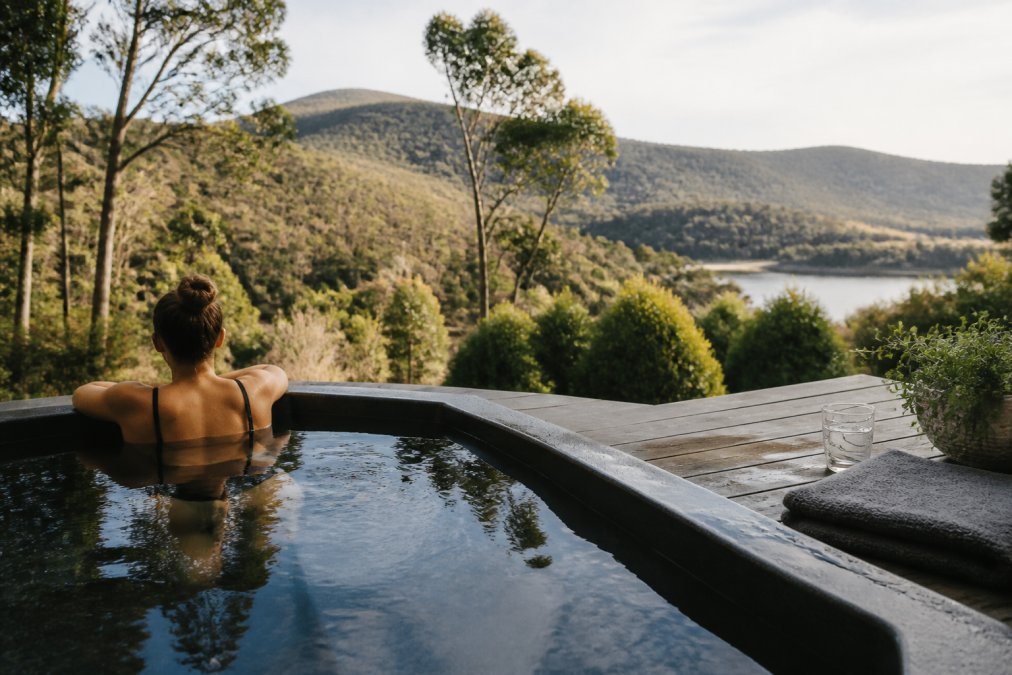
Harmony Hill’s approach is rooted in ancient Egyptian thermal practices combined with modern stress physiology and energy work. The 6-day Thermal Therapy Retreat is designed specifically for deep detoxification and cellular healing.
Chronic stress creates a cascade: elevated cortisol suppresses immune function, disrupts sleep, impairs parasympathetic activation, and changes how your nervous system responds to threat. Your body remains in low-grade fight-or-flight even when threat has passed. peaceful outdoor escapes.
Controlled thermal therapy (sauna, heat immersion, temperature variation) triggers physiological reset. Heat stress activates heat shock proteins supporting cellular repair. It forces parasympathetic activation, your body cannot remain in fight-or-flight while managing heat. It increases circulation, supporting lymphatic drainage and toxin clearance. It normalises cortisol rhythms. These are measurable physiological shifts.
Harmony Hill’s sessions combine thermal work with guided meditation, breathwork, and energy cleansing, all delivered one-on-one. Your body has innate capacity to heal; the retreat activates that capacity and removes obstacles.
This appeals to executives who’ve experienced how chronic stress literally changes physiology. You’re not being told to relax harder. You’re given a physiological intervention that works regardless of mindset. If you arrive skeptical, thermal therapy still activates your parasympathetic nervous system.
The trade-off: this focused approach means deeper immersion in one methodology. If thermal therapy resonates, this depth is transformative. If it doesn’t, you’re committed to one modality for six days.
Elysia’s Breadth and Personalised Combination Model
Elysia’s 50+ therapies offer fundamentally different architecture. You have access to traditional massage, bespoke facials, breathwork, ice bath immersion, energy work, sound therapy, and more. Personalisation means you’re not locked into a single modality.
Your intake assessment identifies your specific burnout presentation. Are you physically tense? Emotionally numb? Cognitively scattered? Energetically depleted? Based on that assessment, your therapist designs a combination. If you’re physically tense, you might get intensive bodywork, ice bath immersion, and breathwork. If you’re emotionally numb, you might get gentler massage, sound therapy, and guided meditation.
This flexibility appeals to people uncertain what they need, who’ve tried one approach unsuccessfully, or who benefit from variety. You’re not diving as deep into any single approach, but more likely to find something that resonates.
Rather than forcing physiological reset through heat stress, you’re creating conditions for your nervous system to find its own way back to baseline. Some people need intensity (ice baths, vigorous massage). Others need gentleness (sound baths, light touch). Elysia’s breadth means your therapist can meet you where you actually are.
Thermal therapy research from the International Journal of Hyperthermia supports physiological benefits of controlled heat therapy for stress recovery and immune function. Multimodal therapy outcomes from the Journal of Alternative and Complementary Medicine indicates that combination approaches often produce more durable behavioural change than single-modality interventions.
The Integration Question
One critical consideration: what happens after the retreat? Harmony Hill’s thermal methodology is difficult to replicate at home. You can’t recreate the specific thermal conditions, 1-on-1 attention, or retreat environment. Your gains may plateau once you leave.
Elysia’s modalities, breathwork, meditation, gentle movement, are more portable. You can continue them at home. This doesn’t mean Elysia’s results are automatically more durable, but the tools are more transferable. If you’re investing in a retreat, you’re investing in lasting change, not temporary relief.
Which Retreat Is Right for You?
The answer depends on how you experience burnout and what you actually need to recover.
Choose Harmony Hill if:
- You need complete solitude and freedom from group dynamics
- You’re seeking intensive, focused healing in one primary modality
- You want undivided therapeutic attention for every session
- You’ve tried group retreats and found them more stressful than restorative
- You need to completely disconnect from any social performance
- You’re looking for a 1-on-1 executive burnout retreat without group yoga
Choose Elysia if:
- You want flexibility to explore multiple therapeutic approaches
- You value the normalising effect of knowing others are going through similar struggles
- You prefer external structure that removes decision-making burden
- You want the option to engage with other guests or remain private
- You’re uncertain what modality will serve you best
- You want a broader range of activities and therapies available
Both retreats can facilitate genuine transformation. The difference is in the container. Harmony Hill provides total solitude and focused intensity. Elysia provides structure and optional community. One isn’t inherently better. The better one matches how you actually heal.
If you’ve spent years managing others’ energy and performing under pressure, Harmony Hill’s ultra-exclusive model might be the permission you need to finally stop. If you’ve become isolated by burnout and need reminding you’re not uniquely broken, Elysia’s community approach might unlock your recovery.
For many high-pressure executives, the turning point is finally committing to one. Both options represent genuine investment in your recovery. The question is which environment will actually allow you to receive that investment.
Executive burnout recovery frameworks from Harvard Business Review emphasise that the most effective interventions match the individual’s specific recovery profile and environmental preferences.
If you’re ready to explore what a transformative wellness retreat experience could look like, Harmony Hill’s ultra-exclusive 1-on-1 model offers the deepest level of personalised attention available. You can view specific programs and book your stay at organicspa-retreat.com.
The most common mistake executives make is choosing a retreat based on reputation rather than fit. A highly-rated retreat that doesn’t match your actual recovery needs will feel like another obligation, not a healing space. Your retreat choice should prioritise your specific burnout presentation, not general prestige.
Frequently Asked Questions
Q: What is the difference between a group-based wellness retreat and a private 1-on-1 retreat?
A: Group retreats involve shared yoga classes, communal dining, and mandatory workshops with other guests, which can limit personalisation and create scheduling constraints. A private 1-on-1 retreat delivers all meditation, healing treatments, and wellness sessions individually tailored to your needs, with complete control over your daily rhythm. This solitude-focused approach accelerates mental clarity and cellular detox without the social dynamics of group settings.
Q: Why choose a private health retreat Australia no group classes over a traditional spa holiday?
A: A private health retreat without group classes focuses on deep mind-body transformation rather than surface relaxation. You receive bespoke thermal therapy, personalised detoxification protocols, and one-on-one guidance rooted in ancient healing wisdom and modern holistic practice. This intensive, individualised structure addresses burnout at its source, whereas a standard spa holiday offers temporary relief without addressing the systemic stress patterns that drive executive fatigue.
Q: How does a 1-on-1 executive burnout retreat without group yoga differ from standard wellness offerings?
A: Standard retreats typically schedule group yoga, shared meditation sessions, and communal activities that may not match your recovery timeline or intensity level. A 1-on-1 executive burnout retreat without group yoga eliminates scheduling conflicts and group dynamics, allowing you to work exclusively with practitioners who understand leadership stress. All movement, breathwork, and mindfulness practices are customised to your nervous system’s needs, ensuring brain de-escalation and lasting transformation rather than temporary relief.
Q: Is a private retreat better for deep mental detoxification than a group-based experience?
A: Yes. Private retreats remove social stimulation and group energy, allowing your nervous system to fully downshift from survival mode. Without mandatory group activities or public dining, you experience uninterrupted cellular detox and mental clarity. The absence of group schedules means healing sessions can adapt in real time to your body’s response, rather than following a fixed timetable designed for many guests. This bespoke structure accelerates the detoxification process and deepens the transformation.