
Table of Contents
- Comparing the Settings: Wilderness Sanctuary vs Subtropical Coast
- Climate and Its Impact on Your Wellness Experience
- Luxury Wellness Retreat for Burnout: What Each Region Offers
- Holistic Detox Treatments: Comparing Therapeutic Approaches
- Accessibility, Logistics and Carbon Footprint
- Bespoke 5 Night Wellness Retreat: Why Duration Matters
- Budget vs Ultra-Luxury: Understanding the Investment Tiers
- Conclusion
- Frequently Asked Questions
Last Updated: September 28, 2026
Comparing the Settings: Wilderness Sanctuary vs Subtropical Coast
The choice between a luxury eco retreat Tasmania vs Byron Bay comes down to one question: do you want to disappear into temperate wilderness or settle into a subtropical coastal town? Tasmania’s luxury eco retreats sit among cool-climate rainforest, alpine heath and rugged coastline. Byron Bay’s sit inside subtropical rainforest, minutes from surf beaches and a busy town centre.
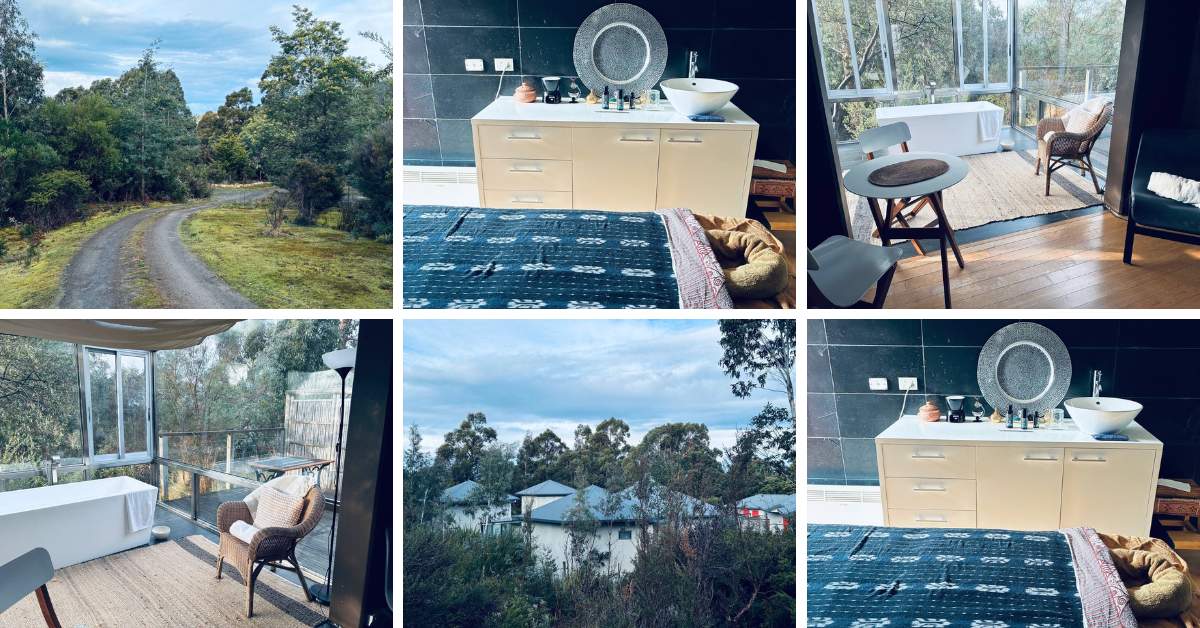
Split-scene photograph showing a rugged Tasmanian wilderness coastline with a modern off-grid lodge on one side, and a lush subtropical rainforest with a coastal resort in the background on the other
That difference shapes everything: the light, the wildlife, the walking, the silence. A coastal setting gives you laid-back charm and beachfront access. A wilderness sanctuary trades that for seclusion and a much smaller guest count. At Harmony Hill Health Retreat, that seclusion is the point, with just two to three guests on site at a time.
Climate and Its Impact on Your Wellness Experience
Most comparisons of a luxury eco retreat Tasmania vs Byron Bay treat climate as a footnote. It is actually the single biggest variable in whether a wellness program works for you, because temperature and humidity shape how quickly a dysregulated nervous system settles. Choosing between these environments requires an honest assessment of whether the financial commitment to a luxury wellness retreat aligns with the physiological restoration you hope to achieve.
The two regions sit in genuinely different climate zones. Tasmania is temperate and strongly seasonal: cool summers, crisp mornings, a real winter, and long daylight in December and January. Byron Bay is subtropical: warm and humid for much of the year, with a wet summer and a mild, drier winter.
Here is how that plays out across the year:
|
Season |
Tasmania |
Byron Bay |
|---|---|---|
|
Summer (Dec-Feb) |
Mild days, cool nights, long daylight, peak walking and produce season |
Hot and humid, afternoon storms, busiest crowds |
|
Autumn (Mar-May) |
Clear, still, golden light, often the quietest premium window |
Warm and settling, fewer crowds after Easter |
|
Winter (Jun-Aug) |
Cold, short days, snow on the highlands, deep hibernation energy |
Mild, dry, sunny, the classic escape window for southern-city travellers |
|
Spring (Sep-Nov) |
Cool and changeable, wildflowers, waterfalls at full flow |
Warming up, windy, shoulder-season value |
For burnout recovery, this matters more than most people expect. Heat and humidity keep the nervous system slightly activated, sleep is lighter, the body works harder to thermoregulate, and it is harder to drop into deep rest. Cool air, long daylight and quiet encourage the opposite. If you run hot, sleep badly and struggle to switch off, a cooler climate often settles the body faster.
Seasonal travel also changes what is available. Tasmania’s best walking, foraging and produce fall in the warmer months, while Byron suits winter escapes from southern cities. A common pattern among practitioners is that guests who book a cool-climate retreat in autumn or early winter report the fastest sleep normalisation, because the body is not simultaneously managing heat load.
The practical takeaway: choose your dates before you choose your property. If you want heat and beach time, book Byron in winter. If you want the body to downshift quickly, book a temperate retreat in autumn or early winter, when the light is still long enough for outdoor walking.
Luxury Wellness Retreat for Burnout: What Each Region Offers
A luxury wellness retreat for burnout works when it removes decisions, not just noise. Tasmania’s dedicated health retreats build structured programs around thermal therapy, bodywork and rest. Byron’s options lean toward resort-style stays with spa add-ons.
- Tasmania: scheduled treatments, single-guest focus, clinical quiet
- Byron: flexible itineraries, beach access, more social atmosphere
- Both: organic produce, nature immersion, digital disconnection
The trade-off is intensity. A resort lets you opt in and out. A structured retreat asks you to commit. For executives who have already tried weekend spa trips, the structured version tends to produce a deeper reset.
Holistic Detox Treatments: Comparing Therapeutic Approaches
Holistic detox treatments in a clinical retreat setting follow a sequence: prepare the body, release tension, then rebuild energy. The signature work at Harmony Hill reflects that order.
The program includes an Ayurveda salt treatment, whole body remedial massage, detox herbal Moxa therapy, Chakra Healing therapy (hot stone massage and organic facial), and detox body scrub and mud in steam capsules. Each treatment targets a different system, which is why they are sequenced rather than offered as a menu.
Accessibility, Logistics and Carbon Footprint
Getting there is part of the decision, and it is where most comparisons stay vague. Here is the practical picture.
Byron Bay is reached by road from the Gold Coast (roughly 45-60 minutes) or Brisbane (roughly two hours), or by flying into Ballina Byron Gateway Airport, about 30 minutes away. That makes it viable for a long weekend from a southern capital, which is exactly why it attracts a more social, higher-turnover crowd.
Tasmania requires a flight into Hobart or Launceston, then a road transfer. Remote eco-lodges are typically 45 minutes to two hours from either airport, and some wilderness properties sit at the end of unsealed roads. That friction is the point: it filters out day-trippers and short-stay traffic, which is why guest counts stay low and silence is genuinely achievable.
Carbon footprint follows the same logic, but not in the direction most people assume. A domestic flight carries a higher emissions cost than a road transfer, but a longer stay spreads that cost across more days of benefit, and a low-occupancy property uses far less water and energy per person than a full resort. The honest comparison is emissions per night of restorative benefit, not emissions per trip.
On sustainability claims, look for verification rather than marketing language. Ecotourism Australia’s ECO Certification and the Global Sustainable Tourism Council’s criteria are the two frameworks most commonly used by Australian operators to substantiate eco credentials. A property that can name its certification, its energy source and its waste handling is a different proposition from one that simply uses the word ‘eco’.
Australian Government climate change guidance outlines how emissions are measured across the economy, and tourism operators increasingly apply the same thinking to their own footprint.
Bespoke 5 Night Wellness Retreat: Why Duration Matters
A bespoke 5 night wellness retreat is the shortest format that allows a genuine reset. The first two days are usually decompression. Real change starts on day three, once sleep normalises and the mind stops reaching for the phone.
That is why five to six nights outperforms a long weekend. Shorter stays end just as the body settles. Longer stays risk diminishing returns for people who need to return to work. A five-night program also fits inside a single week of leave, which makes it realistic for business owners and executives who cannot disappear for a fortnight.
Budget vs Ultra-Luxury: Understanding the Investment Tiers
Retreat pricing splits into three broad tiers, and the difference is mostly about attention and exclusivity rather than thread count.
|
Tier |
Typical Format |
What You’re Paying For |
|---|---|---|
|
Entry |
Group retreat, shared facilities |
Program access, shared sessions |
|
Mid |
Small-group boutique stay |
Private room, semi-private treatments |
|
Ultra-luxury |
Two to three guests, bespoke program |
One-to-one care, full customisation |
Conclusion
The harder question is not which region looks better in photographs. It is which one will actually get you to stop. Coastal towns offer charm and flexibility; a wilderness sanctuary offers the kind of quiet that is hard to find anywhere else.
Frequently Asked Questions
What are the benefits of a luxury eco retreat for burnout recovery?
A luxury eco retreat removes the triggers that keep your nervous system in survival mode: constant notifications, high-stakes decisions and fragmented sleep. The combination of nature immersion, structured therapeutic treatments and complete privacy allows your brain to de-escalate. Programs that include thermal therapy, remedial massage and detox treatments support cellular recovery and immune function. The exclusivity of a small-group setting means every element of the experience is tailored to your specific needs rather than a generic schedule.
How does the climate influence the wellness experience in Tasmania versus coastal regions?
Tasmania’s cooler, temperate climate encourages deeper rest and introspection. The crisp air and dramatic seasonal shifts create a natural rhythm that supports sleep and recovery. Coastal regions like Byron Bay offer warmth and subtropical lushness, which suits those who find heat restorative and enjoy ocean-based activities. If you struggle with heat intolerance or prefer cosy indoor therapies, a cooler climate may serve you better. If you thrive on sun exposure and beach access, a coastal setting aligns more naturally.
What should I look for in a high-end wellness retreat for executives?
Look for small guest numbers, ideally no more than three, so you receive personalised attention. Check whether the program addresses burnout specifically rather than general relaxation. Verify that treatments are delivered by qualified practitioners and that the retreat offers a structured daily rhythm combining movement, therapy and rest. Ask about post-retreat support to help you maintain changes once you return to work. Finally, confirm the retreat is genuinely off-grid or secluded if digital detox is a priority.
Why is a 5-night duration considered optimal for stress release?
Five nights gives your body enough time to move through the initial decompression phase, typically the first two days, and into deeper restorative work. Shorter stays often end just as your nervous system begins to settle. A bespoke 5 night wellness retreat allows for a full cycle of therapeutic treatments, adequate sleep recovery and the mental space to reflect on what you need to change. It is long enough to create lasting shifts without demanding an extended absence from work.