

Table of Contents
- What Is a Wellness Retreat and Why the Hype?
- Benefits of Wellness Retreats: What Actually Changes
- Wellness Retreat Cost Breakdown: Where Your Money Goes
- Wellness Retreat Duration: How Long Should You Stay
- Is a Wellness Retreat Worth the Investment? The Real ROI
- Who Should Book a Wellness Retreat, and Who Shouldn’t
- Conclusion: Making Your Decision
Last Updated: August 9, 2026
What Is a Wellness Retreat and Why the Hype?
A wellness retreat is an immersive, multi-day program designed to help participants step away from daily stress and focus on physical, mental, and emotional restoration through structured activities like meditation, yoga, therapeutic treatments, and nutritional guidance. The concept has exploded in popularity over the past decade, with thousands of retreats now operating across Australia.
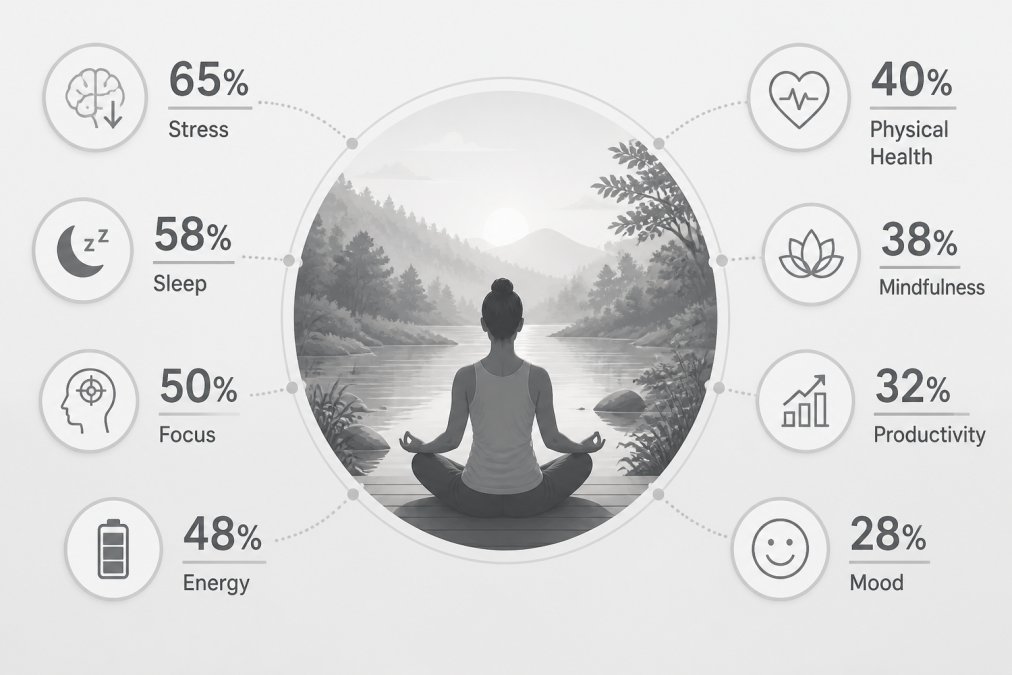
However, not all retreats are created equal. Some deliver genuine transformation; others are expensive holidays with better marketing than substance. The difference often comes down to facilitator credentials, post-retreat support, and whether the retreat addresses your specific pain points rather than offering a generic wellness buffet.
For high-pressure professionals, executives, and business owners, the appeal is obvious: you’re exhausted, sleep is fragmented, and your immune system is shot from chronic stress. But before committing significant money, it’s worth understanding what actually changes, what doesn’t, and whether the investment delivers real ROI or just temporary relief.
This guide from Harmony Hill Health Retreat breaks down the honest truth about wellness retreats: their genuine benefits, hidden costs, red flags to watch for, and a framework for deciding whether one is right for your situation.
Benefits of Wellness Retreats: What Actually Changes
Wellness retreats can deliver measurable improvements across multiple dimensions of health, but outcomes depend heavily on the retreat’s quality and your willingness to integrate changes afterward.
Mental Health and Stress Reduction
The most documented benefit of a structured retreat is significant reduction in perceived stress and improved mental clarity. When you remove yourself from constant emails, meetings, and decision-making for 5-7 days, your nervous system downregulates. Cortisol levels typically drop, sleep improves, and mental fog often lifts within 48 hours of arrival.
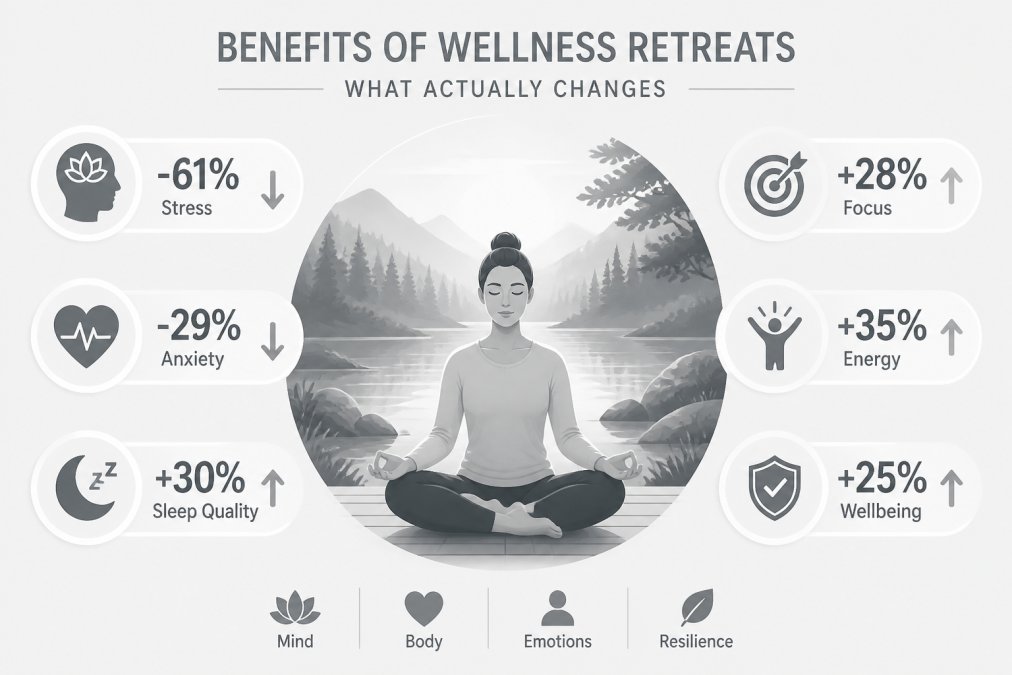
This relief is partly environmental, you’re away from triggers and demands. The real question is whether mental clarity and reduced anxiety persist once you return home, which is where most retreats fall short.
Guided meditation and mindfulness practices can help rewire your stress response over time, but they require ongoing practice. A week of daily meditation won’t undo years of high-stress living unless you commit to maintaining the practice afterward. Many retreats include app-based follow-up or recorded sessions, though attendance drops sharply after the first month.
Physical Health Improvements
Physical benefits are more tangible and measurable. A week of quality sleep, regular movement, and nutrient-dense food produces real physiological changes: improved digestion, clearer skin, better circulation, reduced inflammation. Energy levels spike, and chronic aches often ease.
For executives dealing with postural problems, poor sleep, and weakened immunity, these improvements are noticeable within days. Therapeutic treatments, massage, and hydrotherapy accelerate recovery and provide immediate relief from muscle tension.
The catch: these improvements are largely reversible. Return to 60-hour work weeks and irregular sleep, and you’ll lose most gains within 4-6 weeks. Retreats that focus purely on the week itself without building a sustainable plan for your return are essentially expensive resets that don’t stick.
Emotional Well-being and Personal Transformation
This is where retreats vary most wildly. Some facilitate genuine emotional breakthroughs and clarity about priorities; others are pleasant but superficial. The difference hinges on facilitator credentials, program design, and your openness to the process.
A retreat combining structured reflection with group sharing and skilled facilitation can create space for real insight. Emotional transformation also requires integration, a breakthrough insight means little if you return to the same relationships and work patterns that created the problem. The best retreats include post-retreat coaching or community support to help translate insights into action.
Wellness Retreat Cost Breakdown: Where Your Money Goes
Understanding what you’re paying for is essential to evaluating whether a retreat is worth the investment.
Visible Costs vs Hidden Expenses
The advertised price typically covers accommodation, meals, and core activities. What it often doesn’t include:
Premium spa treatments beyond basic massage, alcohol and additional beverages, private sessions with facilitators or coaches, travel and transfers, post-retreat support subscriptions, and accommodation upgrades.
When you total these hidden costs, a retreat advertised at a certain price point can easily run 20-30% higher than the headline figure.
Comparing Luxury and Budget Options
Australia’s retreat landscape ranges from $400-500 per night for budget options to $1,200+ per night for ultra-luxury experiences. The middle tier, $700-1,000 per night, includes award-winning retreats like Gaia Retreat & Spa and Gwinganna Lifestyle Retreat.
| Retreat Type | Nightly Cost | Group Size | Typical Duration | Best For |
|---|---|---|---|---|
| Budget | $275-500 | 20-60 people | 2-5 nights | First-timers, budget-conscious, group energy |
| Mid-range | $700-1,000 | 10-30 people | 5-7 nights | Serious seekers, balance of quality and value |
| Luxury | $1,200+ | 2-8 people | 5-7 nights | Executives, privacy-focused, intensive transformation |
Budget retreats offer genuine value if you’re testing whether a retreat format suits you. Gwinganna and Billabong are well-established and deliver measurable benefits, though with larger groups and less personalisation.
Luxury retreats justify their cost through exclusivity, highly trained facilitators, bespoke programming, and intensive one-on-one attention. Harmony Hill Health Retreat’s model, accepting only two to three guests per week, creates an entirely different experience. The intimacy allows for truly personalised programming and deeper therapeutic work.
The question isn’t which is "better," but which matches your needs and budget.
Wellness Retreat Duration: How Long Should You Stay
Most retreats operate on a 5-7 day model for good reason: it’s the minimum time required to genuinely shift your nervous system and create space for meaningful change.
The first 2-3 days are largely decompression. Your body processes carried stress, sleep improves, and mental chatter quiets. Days 3-5 are where real benefit occurs, your nervous system has downregulated enough for deeper insight, easier meditation, and emotional breakthroughs. Days 6-7 focus on integration and closure.
A 2-3 night retreat works if your goal is purely rest and stress relief, but rarely creates lasting change. A 5-7 day retreat is the sweet spot for most professionals, long enough to create genuine shifts but short enough to justify time away from work.
Is a Wellness Retreat Worth the Investment? The Real ROI
You’re considering spending $5,000-15,000+ and taking a week away from work. What’s the actual return?
The honest answer: it depends entirely on what you do before, during, and after.
Before the retreat: The best candidates are people already motivated to change but stuck in unsustainable patterns. They have clarity about what needs to shift; they need space and support to make it happen.
During the retreat: A well-designed program with skilled facilitators, therapeutic environment, and structured reflection creates conditions for genuine change. A retreat that’s mostly activities without intentional design delivers surface-level relaxation but little lasting impact.
After the retreat: This is where 80% of retreats fail to deliver ROI. You return to the same work environment and schedule that burned you out. Without a deliberate plan to integrate what you’ve learned and protect the shifts you’ve made, you’ll slip back into old patterns within 4-6 weeks.
Retreats that deliver real ROI include post-retreat coaching, community support, or accountability structures. Harmony Hill Health Retreat’s approach, bespoke programming tailored to your situation, facilitation rooted in practical tools, and ongoing support, is designed to bridge this gap. But even the best retreat requires your commitment to integration.
Post-Retreat Integration: Making It Stick
The difference between a retreat that delivers lasting change and one that fades is what happens in the 30 days after you return.
Week 1 (Return): Your nervous system is still relatively calm. Establish one new non-negotiable habit, a morning meditation practice, daily walk, or weekly planning session. Don’t try to change everything.
Week 2-3 (Normalisation): Work pressure returns. You’ll feel the pull toward old patterns. Protect the habit you established and identify one boundary you need to set (e.g., no emails after 6 pm).
Week 4 (Integration): By now, you’ll know whether the retreat’s insights are shifting your behaviour or whether you’re reverting to survival mode. If reverting, honest reflection is needed about whether the retreat was the right fit or whether your work environment is genuinely unsustainable.
Retreats providing structured follow-up, weekly check-ins, or community access significantly increase the likelihood that changes stick.
Red Flags and Safety Concerns
Not all retreats are safe or ethical. Before booking, watch for these warning signs:
Unqualified facilitators. Check credentials. Legitimate facilitators have formal training in their modality, not just personal experience or weekend certification.
Pressure to commit beyond the retreat. Some retreats use the vulnerability of the retreat environment to sell expensive follow-up programs. Be cautious of high-pressure sales tactics.
Isolation without consent. While digital detox is valuable, you should always have the option to contact family or work in emergencies.
Lack of medical screening. Legitimate retreats ask about health history, medications, and conditions affecting participation.
Promises of cure. Be skeptical of retreats claiming to cure serious mental health conditions or chronic illness. Retreats support wellness but aren’t substitutes for medical treatment.
No clear cancellation policy. A reputable retreat has a reasonable cancellation policy (typically 30-60 days for full refund).
Poor online reviews. Check independent review sites, not just the retreat’s own testimonials.
Who Should Book a Wellness Retreat, and Who Shouldn’t
You should book a retreat if:
You’re experiencing genuine burnout, sleep disruption, or stress-related health decline, and current coping strategies aren’t working. You’re motivated to change but stuck in patterns you can’t break alone. You have the financial capacity without creating stress. You’re willing to do integration work afterward. You’re genuinely open to the process.
You shouldn’t book a retreat if:
You’re in acute crisis (severe depression, suicidal ideation, active addiction). A retreat isn’t a substitute for professional mental health treatment. You’re hoping a week away will fix a fundamentally unsustainable work situation or toxic relationship. You can’t afford it without financial strain. You’re unable or unwilling to take time away from work. You’re skeptical about meditation, yoga, or self-reflection. You have no plan for integration.
A wellness retreat can be a transformative investment, but only if you’re clear about what you’re paying for, realistic about what’s possible, and committed to the work that happens after you leave. The best retreats, like Harmony Hill Health Retreat’s bespoke 6-day Thermal Therapy Retreat, are designed for high-pressure leaders seeking genuine reset and lasting change. But the retreat itself is the beginning, not the end. Your willingness to integrate what you learn and protect the shifts you make determines whether the investment pays off.
Frequently Asked Questions
What is the average cost of a wellness retreat in Australia?
Wellness retreat pricing varies significantly depending on location, duration, and inclusions. Budget options start around AUD $275-$425 per night for accessible retreats, whilst luxury experiences range from AUD $1,145 upward for multi-night packages. All-inclusive retreats in premium locations like Byron Bay and the Gold Coast typically cost more than shorter day visits. For accurate pricing on a specific retreat, contact the facility directly, as rates depend on season, group size, and whether spa treatments are included.
How long should a wellness retreat be to see real results?
Most research suggests that 3-7 days is the sweet spot for meaningful benefits. A 6-day retreat allows sufficient time for your nervous system to genuinely de-escalate, establish new routines, and experience cellular detoxification. Shorter 2-night stays can provide stress relief and mental clarity, but deeper transformation, especially for high-stress professionals, typically requires at least 5-6 days away. The longer you stay, the more embedded new habits become before you return to daily pressures.
Will the benefits of a wellness retreat actually last after I go back to work?
The critical factor is post-retreat integration. Many people experience a 'wellness cliff' within 2-4 weeks of returning if they don't have a structured plan. High-quality retreats provide take-home tools: guided meditation recordings, habit-formation templates, or follow-up coaching sessions. Solo retreats and smaller group settings often yield better long-term results because you receive personalised strategies tailored to your specific work environment and stress triggers. Without intentional integration, even a transformative retreat fades quickly.
What red flags should I watch for when choosing a wellness retreat?
Avoid retreats that make unsubstantiated medical claims, lack transparent facilitator credentials, or pressure you into high-pressure sales for additional treatments. Be cautious of facilities that discourage contact with the outside world entirely (some digital detox is healthy; total isolation can be harmful). Check whether the retreat has public reviews or testimonials from real guests. Verify that the retreat is properly insured and that staff have relevant qualifications in areas like nutrition, therapy, or yoga instruction. Legitimate retreats are transparent about what to expect and honest about limitations.
Is a wellness retreat worth it compared to a regular holiday?
A wellness retreat and a regular holiday serve different purposes. A holiday provides rest and escape; a retreat focuses on structured transformation through guided practices, mindfulness, and often detoxification. For executives experiencing burnout, sleep disruption, or chronic stress, a retreat delivers measurable outcomes: improved cortisol levels, better sleep quality, mental clarity, and sustainable habit change. A regular holiday may feel restorative temporarily but rarely addresses underlying stress patterns. The 'worth' depends on whether you need rest (holiday) or reset (retreat).
This article was written using GrandRanker