

Table of Contents
- Understanding the Post-Retreat Transition
- How to Build a Daily Meditation Habit
- Creating a Mindfulness Routine for Busy Professionals
- Addressing Post-Retreat Blues and Re-Entry
- Designing Your Home Environment for Wellness
- Building Accountability and Support Systems
- Sustaining Your Wellness Gains Long-Term
Last Updated: August 15, 2026
Understanding the Post-Retreat Transition
The days immediately following a wellness retreat feel jarring. Your nervous system has been guided into deep relaxation, your circadian rhythms have reset, and your mind has stopped running at maximum capacity. Then you return to your regular life and everything feels abrupt.
This transition period is where most people lose their retreat gains. Your body and mind are suddenly reintroduced to the stimuli, responsibilities, and pace you left behind. Understanding this psychological reality is the first step toward maintaining wellness after retreat.
Research into habit formation and stress recovery shows that the brain needs time to consolidate new neural pathways. A six-day retreat creates a window of profound change, but that window closes quickly once you’re back in your regular environment. Many people experience a crash around day 3-5 after returning home, energy dips, old stress patterns creep back, and the retreat’s benefits seem to fade. This isn’t failure; it’s a predictable neurological response. By anticipating this phase, you can design systems to protect your wellness gains rather than watching them dissolve.
The post-retreat period is not a return to your old life, it’s a critical transition phase where intentional structure determines whether your retreat’s benefits stick or fade within weeks.
How to Build a Daily Meditation Habit
The most effective way to maintain wellness after retreat is to establish a meditation practice you’ll actually do. Most people fail because they try to replicate the retreat’s 90-minute daily schedule without the retreat’s environment or support.
Start with a sustainable duration. Many busy professionals find that 10-15 minutes of daily meditation is the threshold where consistency becomes possible. If 10 minutes feels ambitious, start with 5 minutes. Consistency matters far more than duration.
Timing is critical. Meditating at the same time each day anchors the habit into your existing routine. Morning meditation, ideally within the first hour of waking, is most effective because it sets your nervous system before the day’s demands begin. If morning doesn’t work, choose a specific time that recurs daily and protect it like a non-negotiable meeting.
Create friction for skipping. Set up a dedicated space, lay out a meditation cushion the night before, use a meditation app that sends notifications at your scheduled time. These small friction points make the behaviour automatic rather than requiring willpower each day.
Pair your meditation with an existing daily habit. Meditating immediately after your morning coffee or right before your shower creates an automatic trigger that requires no additional willpower.
Creating a Mindfulness Routine for Busy Professionals
Meditation is one tool, but mindfulness needs to extend throughout your day. For high-pressure professionals, integrating mindfulness into your existing schedule is more realistic than adding entirely new practices.
Anchor mindfulness moments to existing activities. Before starting your workday, spend 2-3 minutes noticing your breath and body. During lunch, eat without screens. Between meetings, take 60 seconds to notice physical sensations before moving to the next conversation. These micro-practices add up significantly over a day.

Building a mindfulness routine means creating small pockets of intentional pause throughout your day that interrupt the automatic stress response. A 90-second breathing practice before an important meeting shifts your nervous system state before you enter the conversation.
A 2-minute mindfulness practice you do daily is more valuable than a 30-minute practice you do twice a week. Your nervous system responds to regularity, not intensity. By creating multiple small touchpoints of mindfulness throughout your day, you train your brain to remain regulated even during demanding periods.
The most common mistake is treating mindfulness as something you “do” in addition to everything else. Instead, replace existing activities with mindful versions. Mindful eating replaces distracted eating. Mindful walking replaces scrolling on your phone.
Addressing Post-Retreat Blues and Re-Entry
The psychological crash that follows a retreat is a predictable consequence of how your brain processes major environmental and physiological changes. Understanding what’s happening neurologically helps you navigate it without interpreting it as failure.
During your retreat, your nervous system was in a parasympathetic-dominant state. Your cortisol levels dropped, your heart rate variability improved, and your brain’s default mode network quieted down. When you return to your regular environment, your nervous system receives constant signals to activate your stress response: email notifications, work deadlines, household responsibilities. The contrast feels jarring. This adjustment period typically lasts 2-4 weeks.
Many people interpret this adjustment as "the retreat didn’t work." Neither is true. Your nervous system is recalibrating. Your baseline has genuinely shifted; it’s being challenged by your environment. This is where the practices you build in the weeks after your retreat determine whether that shifted baseline sticks.
Plan for a lighter workload in your first week back if possible. Give yourself permission to maintain retreat-like practices, earlier bedtimes, less social stimulation, more time alone, for at least two weeks post-retreat. You’re protecting a fragile neurological state during its most vulnerable period.
Executives who negotiate a gentler re-entry schedule see significantly better long-term outcomes than those who jump back into full intensity immediately.
Designing Your Home Environment for Wellness
Your physical environment either supports your wellness practices or undermines them. Creating at least one dedicated wellness space is essential.
This space doesn’t need to be large, a corner of your bedroom, a specific chair in your living room, or a section of your kitchen table. What matters is that it’s associated with calm and used consistently for your wellness practices. Your brain recognizes this space as a cue for parasympathetic activation.
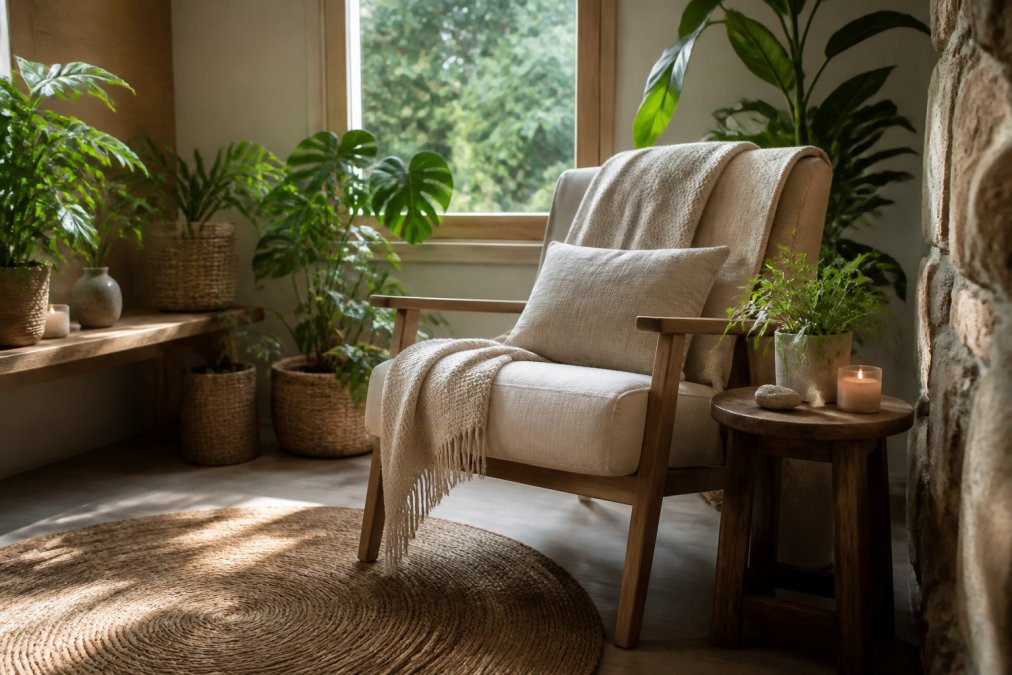
Reduce sensory stimulation in this space. Natural light is ideal; soft lighting is better than harsh overhead lights. Plants affect air quality and create calm. Remove screens from this area. Your wellness space should be a break from digital stimulation.
Manage digital stimulation throughout your home. Set specific times for checking email and social media rather than having notifications on constantly. Use your bedroom as a phone-free zone. These boundaries protect the nervous system regulation you’ve built.
Temperature and comfort matter. Your body’s ability to relax is compromised if you’re cold or uncomfortable. A weighted blanket, comfortable cushions, or a cozy jumper makes the practice more sustainable.
Building Accountability and Support Systems
Accountability is often the difference between maintaining wellness after retreat and gradually slipping back into old patterns. The retreat provided external accountability; once you’re home, that structure disappears.
Create multiple layers of accountability. Find one person, a friend, family member, or colleague, who values wellness and check in weekly. A simple text message: "Did you meditate this week?" creates just enough social accountability to keep you consistent.
Many people find that joining a meditation group or online community provides the support they need. Some professionals hire a wellness coach for the first 3-6 months post-retreat to help them navigate the transition. Track your practices visually with a simple calendar where you mark off each day you meditate. Once you’ve built a 21-day streak, the habit becomes self-sustaining.
The accountability framework that works best is specific, regular, and social. Vague intentions fail. Specific commitments stick.
Sustaining Your Wellness Gains Long-Term
The first 6-8 weeks after your retreat are critical for establishing whether your wellness gains persist. But sustaining them long-term requires understanding that your wellness practice will evolve.
Think of your wellness practice in phases. The first phase, the first 6-8 weeks, is about establishing consistency and protecting your nervous system during re-entry. The second phase, months 2-6, is about finding a sustainable rhythm that fits your life. Your meditation practice might drop from daily to 5 days per week. Mindfulness practices become more integrated into existing routines.
The long-term phase is about maintenance and seasonal adjustment. During high-stress periods, increase your practices. During calmer periods, maintain a baseline. This flexibility prevents burnout and makes your wellness practice something you maintain for decades.
Many professionals find that booking a return retreat every 12-18 months provides the reset they need and reinforces their commitment to their wellness practices.
Wellness after a retreat isn’t about returning to your old life with new insights. It’s about building a new life where the insights you gained are protected by structure, supported by community, and integrated into your daily rhythm.
Returning from a wellness retreat to your regular life is where the real work begins. The retreat showed you what’s possible when your nervous system is genuinely regulated. Maintaining that state requires intentional design: a daily meditation practice, mindfulness integrated into your existing routines, a home environment that supports calm, and accountability systems that keep you consistent.
At Harmony Hill Health Retreat, we’ve guided over 500 leaders through this transition, and the ones who succeed treat the post-retreat period as a critical phase requiring structure and support. The retreat itself is the foundation, but how you maintain wellness after retreat determines whether that foundation becomes a lasting transformation or fades within months.
The practices in this guide, daily meditation, mindfulness routines, environmental design, accountability frameworks, are the bridge between your retreat experience and a sustained shift in how you live. Start with one practice, build consistency, and add layers gradually. Your nervous system doesn’t need intensity; it needs regularity. By honouring that principle, you ensure that the peace and clarity you discovered during your retreat become not a memory of what was possible, but a reflection of how you actually live.
Frequently Asked Questions
Why do I feel low after a wellness retreat, and how long does post-retreat blues typically last?
The shift from a retreat's supportive environment back to daily demands can trigger what many experience as post-retreat blues. This psychological re-entry phase occurs because your nervous system has downregulated significantly during the retreat, and returning to high-stress environments creates a jarring contrast. Most people experience this dip for 1-3 weeks. The key is anticipating this transition and having concrete practices in place before you return home. Journaling, grounding techniques, and maintaining your meditation practice can substantially shorten this period and prevent a complete return to pre-retreat stress levels.
How do I keep my meditation practice going after a retreat?
The retreat environment removes obstacles to consistency, but maintaining that practice at home requires intentional design. Start by committing to a specific time each morning, even if it's just 10 minutes, consistency matters more than duration. Create a dedicated space in your home with minimal distractions. Use a meditation app or timer to remove decision-making. Most importantly, track your practice visually (a simple calendar with checkmarks builds momentum). If you miss a day, resume immediately without judgment. Many find that meditating before checking emails protects the practice from work pressure. Consider joining an online sangha or meditation group to build accountability and community support.
What practical tools can I use to maintain wellness gains on a budget?
Sustaining wellness doesn't require expensive subscriptions or ongoing retreat bookings. Free or low-cost options include: guided meditation apps with free tiers, YouTube breathwork and yoga videos, journaling in a notebook, walking in nature, and thermal bathing at home (a warm bath with Epsom salts replicates some retreat benefits). Set up a simple accountability partnership with a colleague or friend, weekly check-ins cost nothing but dramatically increase follow-through. Create a wellness anchor habit by linking your meditation practice to something you already do daily, like morning coffee. The most sustainable practices are those woven into your existing routine rather than added as extra commitments.
How can I prevent the retreat benefits from falling apart when I return to work pressure?
The retreat's effectiveness depends entirely on what you do after you leave. Before returning to work, schedule a decompression day to journal about insights and create a specific action plan. Communicate boundaries to your team, designate focus time for meditation and self-care as non-negotiable calendar blocks. Design your workspace to include grounding elements: plants, natural light, or a small meditation cushion. During high-stress moments, use the breathwork and nervous system regulation techniques from the retreat as immediate tools. Most critically, establish a weekly check-in ritual (Sunday evening, for example) to assess whether you're maintaining your practices and adjust accordingly. This ongoing reflection prevents the gradual drift back into survival-mode living.
This article was written using GrandRanker