Table of Contents
- Why a Private Health Retreat in Tasmania Beats a Group Program
- The 1-on-1 Executive Burnout Recovery Program Explained
- Inside the Private Thermal Therapy Retreat
- How Long Should a Bespoke Health Retreat Duration Be?
- What a Day at a Private Health Retreat in Tasmania Looks Like
- Getting There, Dietary Needs and the Practical Details
- Making the Reset Stick After You Fly Home
- Conclusion
- Frequently Asked Questions
Last Updated: September 19, 2026
Why a Private Health Retreat in Tasmania Beats a Group Program
A private health retreat Tasmania style works because it removes the audience. At Harmony Hill Health Retreat, only two or three guests share the property at any time, which means no group schedule, no shared silence, and no performing recovery for strangers.
That distinction matters more than most executives expect. Group programs are built around the average of everyone in the room. A private program is built around one nervous system: yours.
Healthdirect Australia guidance on stress and burnout notes that chronic workplace stress responds best to sustained, individualised intervention rather than one-off rest. Six days of undivided attention does what a weekend cannot.
The 6-day Thermal Therapy Retreat is designed for exactly this: deep nervous system de-escalation, not a holiday with wellness branding.
What Changes When Only Two or Three Guests Attend
Small numbers change the mechanics of rest. With two or three guests, sessions start when you are ready, not when the group assembles. Meals are prepared to your requirements. A therapeutic massage can be moved because you slept badly. Nothing is negotiated.
The real luxury of a boutique experience is not the thread count. It is the absence of compromise. Every element of your bespoke itinerary can bend to how your body is actually responding.
There is a common misconception that exclusivity feels isolating. In practice, most guests find the opposite. You are not managing small talk, and you are not comparing your burnout to someone else’s. The mind-body connection gets room to surface.
The 1-on-1 Executive Burnout Recovery Program Explained
An executive burnout recovery program works when it treats the cause, not just the symptom. Sleep disruption, weakened immunity and mental fog are downstream effects of a nervous system stuck in survival mode. Six days of one-on-one care targets the upstream pattern.
This is where the program separates itself from what you have already tried.
How the Program Differs From Meditation Apps and Weekend Spas
Meditation apps ask you to self-administer calm in the same environment that made you unwell. Weekend spas offer restoration without interruption, then send you back into the same load. Both have value. Neither changes the underlying operating state.
A bespoke health retreat duration of six days is long enough to interrupt the stress cycle properly. The first two days usually involve decompression, not transformation. By day three, most guests report that their thinking slows and their sleep deepens. The final days consolidate that shift through guided sessions and natural therapies.
The biggest mistake executives make is booking three days and expecting a six-day outcome. Short programs interrupt the pattern but rarely reset it. You leave rested, not recalibrated, and the old rhythm returns within a fortnight.
Inside the Private Thermal Therapy Retreat
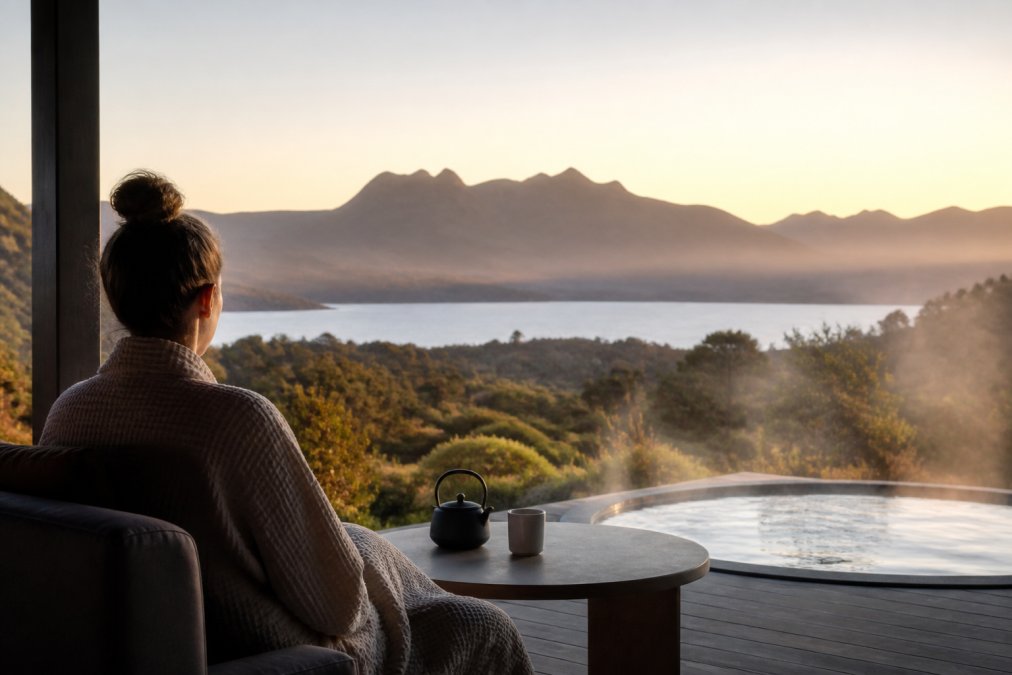
A private thermal therapy retreat uses heat and contrast to support circulation, muscle release and deep rest. At Harmony Hill Health Retreat, thermal work sits alongside ancient Egyptian teachings and modern holistic practices rather than replacing them.
The sequence matters. Heat prepares tissue and calms the mind. Cooling contrast supports circulation and alertness. Rest between rounds is where the nervous system does its actual repair. Guests are guided through each stage rather than left to guess.
Better Health Channel on heat therapy and recovery explains how thermal contrast supports circulation and muscular recovery. Pair that with energy healing and mindfulness meditation and you have a full day of nervous system work rather than a single appointment.
How Long Should a Bespoke Health Retreat Duration Be?
Six days is the practical sweet spot for executive burnout recovery. It allows full decompression, meaningful therapeutic work, and enough consolidation that the change holds after you fly home.
Shorter stays suit people who need a pause, not a reset.
| Duration | Best For | Typical Outcome |
|---|---|---|
| 3 nights | A short pause from acute pressure | Rested, not reset |
| 5 nights | Stress management and sleep repair | Noticeable improvement |
| 6 nights | Executive burnout recovery | Sustained recalibration |
| 8+ nights | Deep exhaustion or major life transitions | Full restorative reset |
If you are unsure, book the shorter option. Arriving over-committed to a long stay creates its own pressure, which defeats the purpose entirely.
What a Day at a Private Health Retreat in Tasmania Looks Like
| Time | What Happens | Why It Is Sequenced This Way |
|---|---|---|
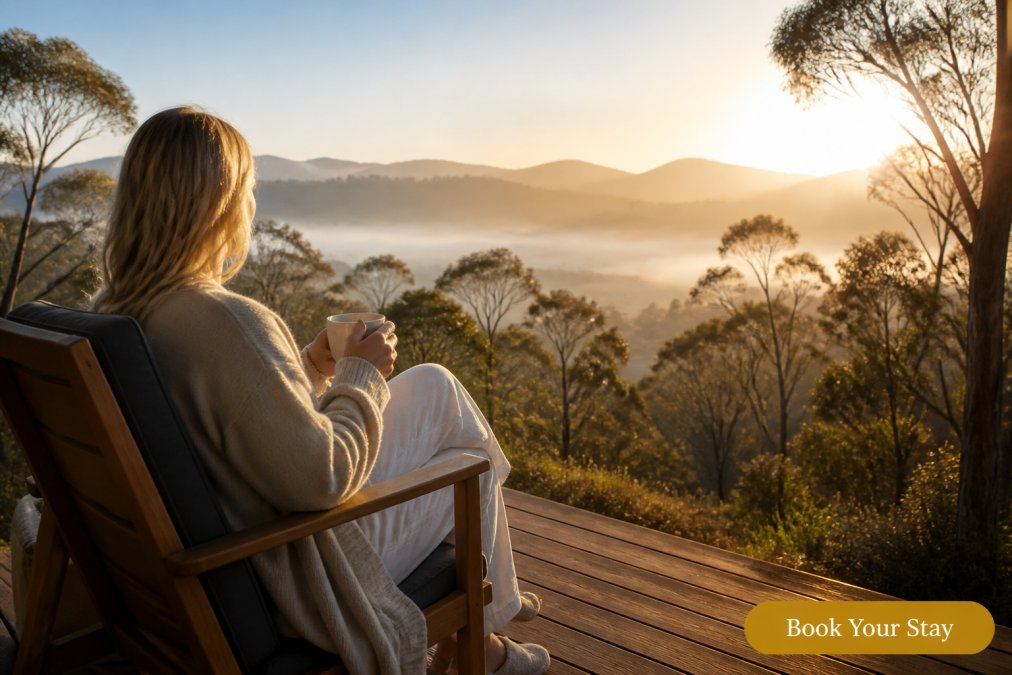
| 7:00-7:30am | Herbal tea, quiet breathwork on the deck | Wakes the nervous system without a cortisol spike |
| 7:30-8:30am | Breakfast, prepared to your dietary requirements | Blood sugar stability before thermal work |
| 9:00-10:30am | Thermal therapy session (heat, contrast, guided rest) | Heat prepares tissue; rest between rounds is where repair happens |
| 11:00am-12:00pm | Therapeutic massage or energy healing | Works on the muscular tension that accumulates with chronic stress |
| 12:30-1:30pm | Lunch and unstructured time | Digestion needs a calm state, not a schedule |
| 2:00-4:00pm | Nature immersion, guided session or rest | The block most guests use to sleep, walk or simply sit |
| 4:30-5:30pm | Mindfulness meditation or breathwork | Lowers arousal before the evening meal |
| 6:00-7:00pm | Dinner | Light, early and adapted to your requirements |
| 7:30pm onward | Quiet by design | Most guests notice how long it has been since they felt genuinely calm |
A private retreat day is not emptier than a group one. It is more precisely aimed. The same therapies appear, but the sequence, pace and intensity bend to one person’s nervous system rather than an average of twelve.
If you want to see how this rhythm maps across a full six-day program, View Packages to compare the inclusions.
Getting There, Dietary Needs and the Practical Details
Logistics are where most retreat guides go quiet, so here is the practical version. This is the section that decides whether a retreat is actually bookable for you, not just appealing.
Getting There From the Mainland
Flights land at Launceston or Hobart. From either airport, the drive to a secluded retreat is typically one to two hours, depending on the property. Transfers can be arranged so you are not navigating unfamiliar roads after a long day of travel, and that is worth taking. Rural roads at dusk, wildlife and fatigue are a poor combination.
Dietary Specificity
This is not a one-menu-fits-all kitchen. Requirements are collected before arrival, and a detox diet approach is adapted around allergies, intolerances and medical needs rather than applied rigidly. In practice that means:
- Gluten-free and coeliac requirements, meals are built from naturally gluten-free whole foods rather than substitutions, which is easier to do when the kitchen is cooking for two or three people.
- Vegan and vegetarian, plant-based menus are prepared as a default option, not a side dish, with attention to protein and iron so energy holds through the program.
- Gut-health and low-FODMAP, a gentler, cooked-food approach is common in the first days, then broadened as digestion settles.
- Allergies and medical diets, flagged early so the menu is planned around them rather than adjusted at the table.
What It Costs and How to Compare Tiers
| Tier | What You Are Paying For | Typical Trade-Off |
|---|---|---|
| Group wellness retreat | Shared schedule, shared accommodation, lower per-night cost | Less flexibility; program built around the group average |
| Boutique private retreat | One-on-one sessions, bespoke itinerary, small guest numbers | Higher per-night cost; limited dates |
| Luxury spa hotel | Polished facilities, a la carte treatments | No integrated program; you assemble the wellness yourself |
| Extended residential program | Weeks of structured care | Significant time away from work |
Executives who need genuine privacy, flexible scheduling and a program built around their own assessment rather than a fixed group timetable.
Ready to check dates and inclusions? Explore Our Retreat or Book Your Stay to start the conversation.
Making the Reset Stick After You Fly Home
Post-retreat integration is the part most programs ignore, and it is where the real value is won or lost. Feeling well for a week is easy. Keeping it while running a P&L is the actual test.
Conclusion
The challenge is not finding six days. It is trusting that six days of genuine, undivided attention will do more for your performance than pushing through another quarter. Burnout does not resolve through willpower, and it rarely resolves through a normal holiday.
Safe Work Australia on work-related psychological health
Frequently Asked Questions
How does a private health retreat differ from a group wellness program?
A group program runs to a fixed schedule shared with a dozen or more guests. A private health retreat such as Harmony Hill takes only two or three guests at a time, so every session, meal and therapy slot is built around one person’s needs. That means no group yoga, no waiting for a shared timetable, and a wellness assessment that shapes the whole stay. The one-on-one format also suits executives who need discretion and cannot sit in a circle sharing personal struggles with strangers.
What should I look for in a luxury burnout recovery retreat?
Look for a personalised program rather than a fixed schedule, and a genuinely secluded sanctuary. Check whether therapies are delivered one-on-one, whether the catering handles dietary specificity, and whether the retreat offers any post-retreat integration support. Ask how many guests are on site at once. A boutique experience capped at two or three guests gives you the privacy and attention that a large resort cannot match.
How long should a bespoke health retreat duration be for executive burnout?
Six days is a common length for deep burnout recovery, because the first two days usually go to decompression and sleep repair before any real mind-body work begins. A shorter stay can help you rest, but it rarely gives enough time for a full thermal therapy cycle and the guided sessions that build sustainable habits. If you can only spare a weekend, treat it as a starting point rather than a reset.
Are private health retreats effective for long-term stress management?
They can be, provided the retreat teaches tools you keep using. The value comes from guided sessions in breathwork, mindfulness meditation and stress management that you can repeat at home. Without that post-retreat integration, the benefits fade within a month. Ask any retreat how it supports guests after they fly home before you book.