Table of Contents
- Why Luxury Wellness Experiences Matter for High-Pressure Leaders
- Understanding Executive Burnout Retreat Options
- The Six-Day Thermal Therapy Retreat Model
- Small-Group Wellness Retreat Benefits for Privacy and Connection
- Wellness Retreat for Business Leaders: What to Expect
- How Luxury Wellness Experiences Deliver Lasting Results
- Making the Investment Decision
- Frequently Asked Questions
Last Updated: October 20, 2026
Why Luxury Wellness Experiences Matter for High-Pressure Leaders
High-pressure executives face a unique challenge: the demands of leadership create chronic stress that weekend getaways and meditation apps simply cannot reverse. The body enters survival mode. Sleep suffers. Immunity weakens. Decision-making deteriorates.
This is where luxury wellness experiences executives need become not a luxury, but a necessity. At Harmony Hill Health Retreat, leaders who invest in intensive, immersive wellness programmes experience something fundamentally different from standard spa visits. The difference lies in duration, exclusivity, and depth of transformation.
A proper reset requires time away from work triggers. It requires privacy to process burnout without performing strength for others. Most importantly, it requires structured guidance through genuine detoxification, not just physical, but neurological and emotional. That’s what distinguishes a true executive retreat from a holiday.
Understanding Executive Burnout Retreat Options
Executives approaching burnout typically consider three pathways: extended leave (often impossible), therapy or coaching (valuable but incomplete), or a dedicated wellness retreat designed specifically for their situation.
The burnout retreat market offers varied options. Some focus on fitness or nutrition. Others emphasise spiritual practices. The most effective programmes combine multiple modalities into a coherent system where each element supports the others. The goal isn’t activity, it’s activation of the body’s own capacity to heal.
What makes a retreat suitable for executives differs from what works for general wellness seekers. Executives need programmes that respect their intelligence, provide measurable frameworks, and deliver results they can sustain once they return to demanding roles.
The Six-Day Thermal Therapy Retreat Model
The six-day structure represents an optimal window for genuine transformation. Six days allows the body to move through distinct phases: initial decompression, active detoxification, deep restoration, and integration of new patterns.
How Thermal Therapy Supports Recovery
Thermal therapy, the strategic use of heat, water, and temperature variation, works on multiple physiological levels. Heat increases circulation, supports lymphatic drainage, and triggers the release of heat-shock proteins that repair cellular damage caused by chronic stress.
This isn’t new theory. Thermal bathing practices appear across ancient cultures, from Japanese onsen to Egyptian temple baths, because the mechanism works consistently. Modern research has validated what practitioners observed for millennia: structured thermal exposure supports recovery from burnout and immune function.
The key word is structured. Random hot baths provide temporary comfort. A designed thermal therapy protocol, sequencing temperature, duration, and recovery phases, creates lasting neurological change. The body learns a new set point. Stress response normalises.
What Happens During a Six-Day Programme
Day one focuses on arrival and initial settling. The nervous system begins to recognise safety. Sleep quality typically improves immediately once the mind stops processing work demands.
Days two and three intensify the detoxification process. Thermal protocols increase in depth. Guided practices help surface and release accumulated emotional tension.
Days four and five shift toward restoration and integration. The nervous system begins to reorganise around new patterns. Guests typically report clarity, creativity, and a sense of genuine peace that feels unfamiliar after years of high-pressure operation.
Day six prepares for reintegration. The focus moves to practical tools and frameworks guests can implement immediately upon return to their roles.
Small-Group Wellness Retreat Benefits for Privacy and Connection
Exclusivity serves a purpose beyond luxury. When a retreat welcomes only two to three guests at a time, the entire experience transforms. There’s no audience. No performance. No need to maintain a professional facade.
This privacy enables genuine vulnerability, the prerequisite for real transformation. Executives can acknowledge struggles without concern that word will spread through their network. They can cry, process fear, or sit in silence without self-consciousness.
Small-group settings also create unexpected connection. When three high-performing individuals meet in a space designed for authenticity, something shifts.
The intimacy also allows for personalisation. Rather than following a standardised programme, each guest’s retreat adapts to their specific needs, preferences, and capacity on any given day.
Wellness Retreat for Business Leaders: What to Expect
A comprehensive executive wellness retreat combines accommodation, therapeutic facilities, and service design into a coherent experience. For business leaders, the practical questions are whether the environment supports genuine recovery, whether privacy is protected, and whether the programme fits a tight schedule. The following sections explain what to look for and how to plan a stay.
Accommodation and luxury amenities
Luxury accommodation serves a functional purpose beyond comfort. A quiet, well-designed environment helps the nervous system relax more deeply. High-quality linens, temperature control, and views of natural landscape all contribute to the shift away from survival mode.
Effective executive retreats provide private rooms with ensuite facilities, climate control, and access to outdoor spaces. Many include private balconies or gardens where guests can sit in solitude.

Amenities extend beyond the bedroom. Common areas designed for relaxation, quiet lounges, reading spaces, and outdoor seating provide options for both solitude and optional connection.
Spa facilities and wellness spaces
The physical infrastructure of wellness spaces matters significantly. Dedicated spa facilities with thermal pools, saunas, and steam rooms create the environment where therapeutic protocols occur. These are not standard hotel amenities; they are purpose-designed spaces intended for specific health outcomes.
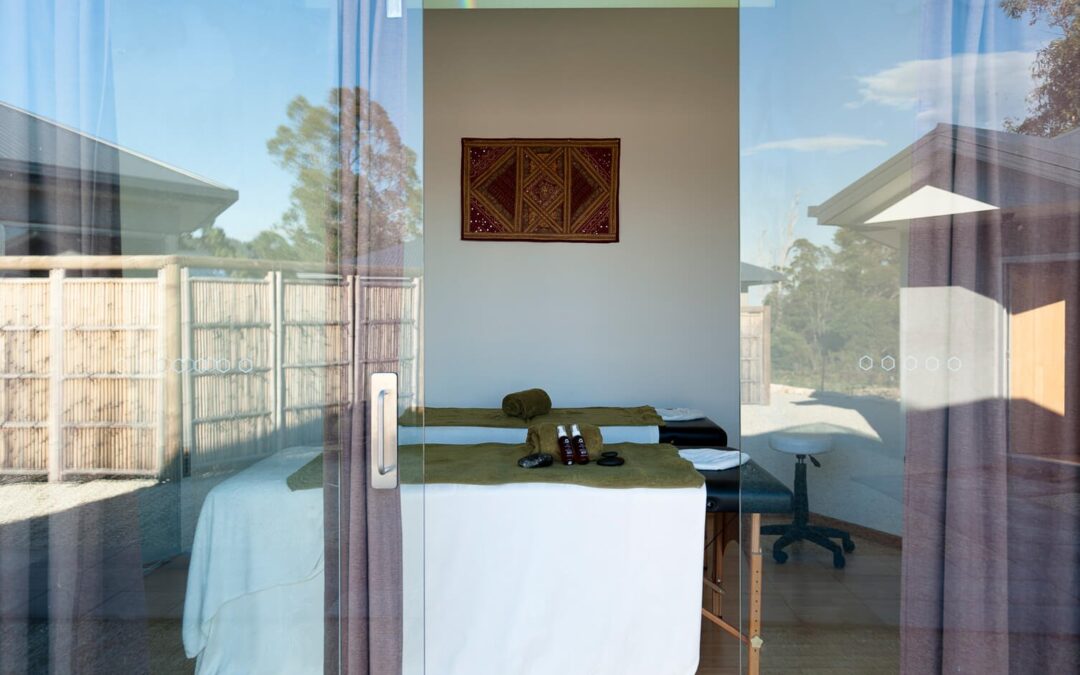
Thermal pools maintained at varying temperatures allow for the temperature cycling that supports nervous system recalibration. Saunas and steam rooms support detoxification and lymphatic function. Treatment spaces for massage, bodywork, and other modalities provide the privacy and comfort essential for deep work.
The quality of these facilities distinguishes a genuine wellness retreat from a luxury hotel with spa services. Purpose-built spaces with appropriate equipment and design create conditions where transformation becomes possible rather than merely comfortable.
Corporate packages, team retreats, and private bookings
Executives often need to plan for more than one person. Ask providers about the following practical details:
- Group sizes: Many retreats cap groups at two to three guests to preserve privacy. For team retreats, confirm the maximum capacity and whether the property can be booked exclusively.
- Meeting facilities: If the retreat is to combine wellness with planning, confirm whether a private meeting room, reliable internet, and presentation equipment are available.
- Catering: Ask whether menus can be tailored for dietary requirements, whether alcohol is served, and how meals are scheduled around programming.
- Privacy and confidentiality: Confirm staff confidentiality arrangements and whether other guests will be present during your booking.
- Booking and payment: Request written terms covering deposits, cancellation, rescheduling, and invoicing in Australian dollars (AUD).
Location, travel time, and itinerary planning
Time is an executive’s scarcest resource. When comparing locations, consider:
- Travel time: Total door-to-door time from your departure point, including transfers. A wilderness setting may offer deeper immersion but add travel time; a property closer to the city may suit shorter stays.
- Transfers: Whether airport or city transfers are included or can be arranged, and at what cost.
- Itinerary fit: Whether arrival and departure days include programming, and whether a shorter stay can be tailored for a tight schedule.
- Accessibility: Step-free access, room location, and any mobility considerations.
A common pattern is for executives to arrive on a Sunday evening and depart on a Friday afternoon, allowing five nights away with minimal disruption to the working week. Confirm whether the programme can accommodate this pattern and what pre-retreat preparation is required.
Explore Our Retreat to review accommodation, facilities, and booking options for executive stays.
How Luxury Wellness Experiences Deliver Lasting Results
The concern most executives voice before committing is straightforward: “I’ll feel great for a week, then return to the same chaos and it all falls apart.” This concern is valid. Standard retreats often produce temporary relief without lasting change.
Lasting results require three elements working together. First, the retreat must create genuine physiological reset, supporting nervous system function and sleep architecture. Second, guests need practical frameworks and tools they can implement immediately upon return.
The most effective programmes include pre-retreat preparation and post-retreat support. Before arrival, guests work with practitioners to clarify their primary challenges and intentions.
Without this architecture, even profound retreat experiences fade. With it, the shift becomes sustainable.
Making the Investment Decision
Executives evaluating luxury wellness experiences executives require need more than a philosophy; they need a clear framework for comparing options on time, cost, privacy, and likely outcomes. Most retreat listings provide little comparable detail, so the following criteria are designed to help you assess any programme on equal terms.
A practical comparison framework
Use these dimensions to shortlist providers and request written confirmation before booking:
- Time efficiency: Total nights away, daily programme hours, and transfer time from the nearest airport or city centre. A six-day immersion typically requires five nights away plus travel; confirm whether arrival and departure days include programming.
- Discretion and privacy: Maximum group size, whether rooms are private with ensuite, staff confidentiality arrangements, and whether the property is exclusive to retreat guests.
- Clinical and therapeutic depth: Qualifications of practitioners, whether thermal protocols are sequenced and supervised, and what pre- and post-retreat support is included.
- Inclusions and exclusions: Accommodation, all meals and beverages, treatments, transfers, and any optional add-ons. Ask for a written inclusion list rather than relying on package summaries.
- Indicative pricing: Request a quote in Australian dollars (AUD) that separates accommodation, programme, and any third-party costs such as flights or ground transport. Pricing varies by season, room type, and group size, so treat any published figure as indicative only.
- Cancellation and rescheduling terms: Particularly important for executives whose schedules change at short notice.
The cost of inaction
Burnout carries measurable organisational costs: reduced decision quality, damaged relationships, and health consequences that compound over time. For senior leaders, even modest improvements in sleep, clarity, and stress regulation can justify a significant investment. The practical question is not whether a retreat is affordable, but whether the expected return, in sustained performance and wellbeing, exceeds the cost of continuing without intervention.
For executives seeking targeted intervention, options like the 5-Night Stress Release Retreat or the 6-Night Detox Retreat provide structured pathways designed specifically for the recovery needs of high-performing leaders. Both programmes combine the thermal therapy protocols and small-group privacy outlined above, with pre-retreat assessment and post-retreat support built into the framework.
Questions to ask before committing
- What is the maximum group size, and how many guests are typically present?
- Are practitioners available for one-to-one sessions, and how many are included?
- What pre-retreat preparation and post-retreat follow-up are provided?
- Can the programme be adapted for dietary requirements, injuries, or medical conditions?
- What are the payment terms, and is a deposit required?
View Packages to compare inclusions, dates, and indicative pricing for executive wellness retreats.
Frequently Asked Questions
How is a six-day thermal therapy retreat different from a weekend spa trip?
A weekend spa focuses on surface relaxation through massages and treatments. A six-day thermal therapy retreat facilitates deep cellular detoxification and nervous-system reset through immersive thermal experiences, structured wellness programs, and intensive mind-body work. The extended duration allows your body to move beyond the stress response and activate its natural healing capacity—something weekend visits cannot achieve.
What makes a small-group wellness retreat better for executives than larger retreats?
Small-group wellness retreats (two to three guests) eliminate social pressure and allow completely personalised programs. Executives benefit from privacy, undivided attention from facilitators, and the ability to process burnout without performing for others. The intimate setting creates safety for genuine vulnerability and transformation—essential for high-pressure leaders carrying the weight of decision-making.
Will the benefits of a wellness retreat actually last after I return to work?
The goal of a structured retreat is to reset your nervous system and teach your body a new baseline state. Many leaders report sustained improvements when they establish post-retreat practices (breathing techniques, sleep routines, boundary-setting) and view the retreat as the beginning of a wellness journey, not a one-time escape. The cellular and neurological changes activated during an intensive program create a foundation you can build on.
What should I look for when choosing a luxury wellness experience as a busy executive?
Prioritise exclusivity (small group size), bespoke programming tailored to your specific burnout pattern, evidence of results with similar clients, and facilities that support genuine rest (thermal spaces, private accommodation, quality dining). Verify the retreat’s philosophy aligns with your needs—whether you seek spiritual alignment, nervous-system recovery, or both. Ask about post-retreat support to ensure lasting impact.