
Table of Contents
- Understanding Detox Herbal Moxa Therapy
- Direct vs Indirect Moxibustion: Which Suits Your Goals
- Types of Moxa: Sticks, Cones, and Loose Moxa
- Moxibustion Safety: Essential Precautions and Burn Prevention
- How Often to Use Moxa: Finding Your Treatment Frequency
- Moxibustion Contraindications: Who Should Avoid This Therapy
- Selecting a Qualified Practitioner and Treatment Setting
- Your Decision Framework: Matching Moxa Therapy to Your Needs
- Frequently Asked Questions
Last Updated: October 19, 2026
Understanding Detox Herbal Moxa Therapy
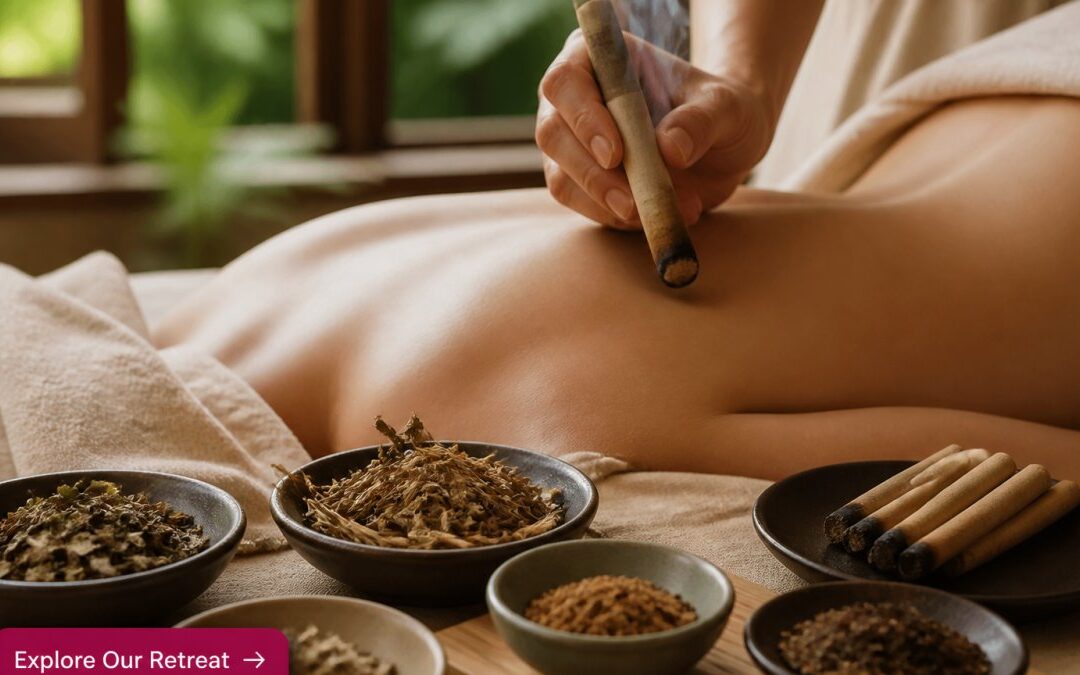
Detox herbal moxa therapy combines ancient heat treatment with herbal medicine to support the body’s natural cleansing processes.
The term “detox” here doesn’t mean flushing toxins like a commercial product might claim. It refers to supporting your body’s own elimination systems: lymphatic circulation, digestion, and stress recovery.
How moxibustion works involves applying therapeutic heat to specific treatment points. The warmth penetrates deeper than surface comfort, stimulating blood flow, encouraging lymphatic movement, and signalling your nervous system that it’s safe to relax.
The real value of detox herbal moxa therapy for busy leaders isn’t mystical. It’s a practical tool that activates your parasympathetic nervous system, allowing your body to recover from chronic stress at a physiological level.
Direct vs Indirect Moxibustion: Which Suits Your Goals
Direct moxibustion places a moxa cone or stick directly on the skin above an acupuncture point. The heat is immediate and intense, delivering faster results for sluggish circulation or deep muscular tension.
Indirect moxibustion uses a barrier between the moxa and your skin, often ginger, salt, or a moxa box holding heat at a distance. The warmth is gentler and more sustained, suiting newcomers, sensitive skin, or anyone preferring a longer, slower treatment.
For your first moxa experience, indirect application is the safer choice. Once you understand how your body responds to heat and understand proper technique, you can explore direct methods with a practitioner’s guidance.
Types of Moxa: Sticks, Cones, and Loose Moxa
Moxa sticks are compressed rolls of dried mugwort herb, roughly cigar-sized. You light one end and hold it above or near your skin, moving it in circles or holding it over specific points.
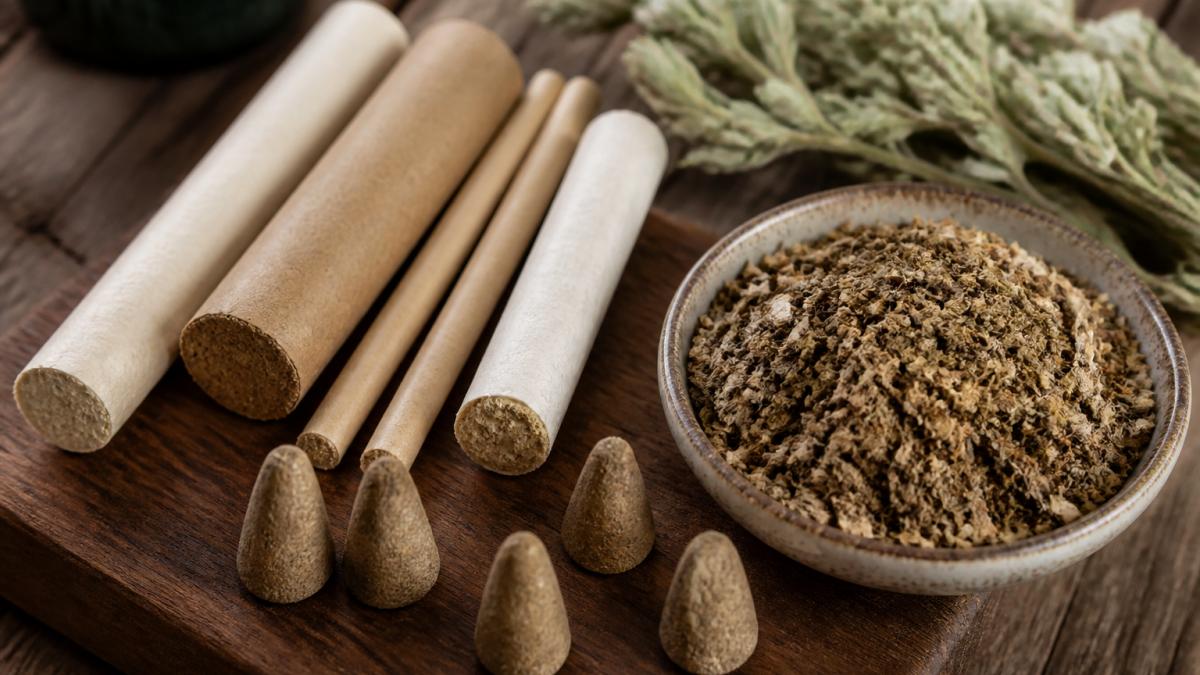
Moxa cones are small, pyramid-shaped pieces stacked directly on the skin (direct) or placed in a holder above it (indirect). They deliver concentrated heat quickly and suit professional clinics where timing is monitored precisely.
Loose moxa is raw, shredded mugwort herb placed directly on skin or in a moxa box.
| Moxa Type | Best For | Heat Delivery | Skill Required |
|---|---|---|---|
| Moxa sticks | At-home use, beginners | Moderate, controllable | Low to moderate |
| Moxa cones | Professional clinics, fast results | Intense, concentrated | High |
| Loose moxa | Experienced practitioners, precision | Variable, customisable | High |
Moxibustion Safety: Essential Precautions and Burn Prevention
Ventilation is essential. Moxa smoke irritates airways and can trigger coughing in poorly ventilated spaces. Open windows or use extraction fans; if you’re smoke-sensitive, choose indirect methods or a professional clinic with proper ventilation.
Burn prevention starts with awareness. Moxa reaches temperatures hot enough to cause mild burns if held too close or left in one spot too long.
Common-sense precautions:
- Never apply moxa directly over broken skin, active infections, or areas with reduced sensation
- Keep moxa at least 1-2 centimetres from your skin during indirect application
- Limit initial sessions to 10-15 minutes per point
- Avoid moxa on the face or sensitive areas until you’re experienced
- Have someone supervise your first session if possible
Skin irritation usually appears as mild redness that resolves within hours. Actual burns are rare with indirect methods but can happen with direct application.
Never use moxa if you’re pregnant, have active fever, or take medications that increase skin sensitivity. Certain conditions like severe dehydration or extreme heat sensitivity make moxa unsuitable. Always discuss moxa therapy with your healthcare provider before starting, especially if you have chronic health conditions.
How Often to Use Moxa: Finding Your Treatment Frequency
The key is consistency over intensity. One session weekly, sustained for 8-12 weeks, typically produces better results than sporadic intensive sessions, your body responds to regular, gentle stimulation better than occasional aggressive treatment.
Adjusting frequency based on your response means tracking energy and sleep quality, digestive function, stress resilience, and muscle tension and circulation. If you feel noticeably better after 4-6 sessions, continue at that frequency.
Moxibustion Contraindications: Who Should Avoid This Therapy
Use this consolidated screening checklist before booking a session or lighting a stick at home. If any item applies, discuss it with a qualified practitioner or your healthcare provider first.
Screening checklist
Pregnancy and reproductive health
- Avoid moxa during pregnancy unless specifically directed by a qualified practitioner; certain points are traditionally avoided because they may stimulate uterine activity.
- Discuss any recent pregnancy loss, fertility treatment, or menstrual concerns before treatment.
Skin and sensation
- Do not apply moxa over broken skin, rashes, active infections, or healing wounds.
- Avoid areas with reduced sensation (for example, neuropathy related to diabetes) because you may not feel heat building to a burn.
- Be cautious with eczema or psoriasis flare-ups; heat and smoke can aggravate inflamed skin.
Respiratory and smoke sensitivity
- Moxa smoke irritates some airways. If you have asthma, chronic bronchitis, or known smoke sensitivity, choose a well-ventilated clinic or ask about smoke-reduced options.
- Never treat in a small, unventilated room.
Cardiovascular and systemic conditions
- Seek advice first if you have uncontrolled high blood pressure, a history of blood clots, or significant heart disease.
- Avoid moxa during active fever or acute infection.
- Be cautious with severe dehydration or heat intolerance.
Medications and bleeding risk
- Tell your practitioner if you take blood thinners or medications that affect skin healing; even minor burns can be more troublesome.
- Mention steroids, immunosuppressants, or anything that changes how your skin responds to heat.
Recent surgery and acute injury
- Avoid moxa over recent surgical sites or acute injuries until cleared by your treating clinician.
When to stop and seek advice
Stop treatment and seek medical attention if you experience blistering, significant pain, a burn that does not heal within a few days, dizziness, or breathing difficulty. Mild redness that fades within hours is common with indirect methods; anything more is a signal to reassess.
Questions to ask before you start
- What is your training and experience with moxa specifically?
- How will you screen me for the risks above?
- What ventilation and burn-prevention measures are in place?
- What should I do if I feel unwell during or after a session?
This checklist supports, but does not replace, individual advice from a qualified practitioner or your doctor. If you are unsure about any item, treat it as a reason to ask before proceeding.
Selecting a Qualified Practitioner and Treatment Setting
Credentials to look for include formal training in traditional Chinese medicine, acupuncture, or herbal medicine through recognised programs; in Australia, many practitioners hold qualifications from accredited colleges or universities. Ask how long they’ve practised moxa therapy specifically, general acupuncture training doesn’t always include deep moxa expertise.
Clinic environment matters. Professional settings have proper ventilation, clean treatment rooms, and clear hygiene protocols. The practitioner should explain what to expect, answer questions without dismissing concerns, and never pressure you.
Your Decision Framework: Matching Moxa Therapy to Your Needs
Most guides explain what moxa is and how it’s applied. Fewer help you decide whether a detox-oriented herbal moxa therapy is right for you, or what “detox” can reasonably mean here. This section is that decision guide.
Step 1: Define what you mean by “detox”
In traditional Chinese medicine, “detoxification” loosely describes supporting the body’s own elimination and regulation, lymphatic circulation, digestion, sleep, and stress recovery. It is not a claim that moxa removes specific toxins, and no credible Australian practitioner should promise that. Before choosing a therapy, separate three things: The distinction between localized heat application and systemic bodywork remains vital, especially when choosing massage therapy to address the underlying tension patterns that often accompany chronic physical discomfort.
- Established effects: local warmth increases blood flow and can ease muscular tension; the ritual and quiet of a session supports relaxation.
- Traditional claims: supporting circulation, digestion, and the body’s natural recovery processes.
- Unsupported claims: “flushing toxins”, “removing heavy metals”, or “one session to reset”. Treat these as marketing, not medicine.
A therapy worth choosing will describe its intended effects in the first two categories and avoid the third.
Step 2: Compare your three realistic options
| Option | What it involves | Best for | Watch-outs |
|---|---|---|---|
| Practitioner-led treatment | Assessment, point selection, indirect or direct moxa in a clinic | First-timers, complex health histories, anyone wanting supervision | Requires access to a qualified practitioner; recurring appointments |
| At-home product use | Moxa sticks or boxes with self-directed technique | People who have had at least one supervised session and want convenience | Higher burn risk without training; smoke management at home |
| Alternatives | Acupuncture, manual therapy, thermal therapies, stress-recovery programs | People who dislike smoke, heat, or the idea of burning herbs | Different mechanisms; not a like-for-like substitute |
A common pattern: start practitioner-led for two or three sessions, then continue at home with periodic review, giving you technique, feedback, and a safety check before you self-treat.
Step 3: Match the format to your goal
- Stress recovery and sleep: gentler indirect methods, longer and less intense sessions, consistent frequency. For those seeking a more immersive experience, the 6-Night Detox Retreat combines restorative practices in a dedicated setting designed to support deep relaxation and nervous system recovery.
- Muscular tension and circulation: a practitioner may use more concentrated heat over specific points.
- General resilience: regular, moderate sessions rather than occasional intensive ones.
Step 4: Run the practical checks
- Time: can you sustain weekly sessions, or do you need a home routine?
- Budget: plan for a course of treatment rather than a single session; at-home supplies are modest by comparison, but factor in quality.
- Access: is a qualified practitioner reasonably available to you?
- Comfort: are you willing to try heat and smoke, or would a smoke-free alternative suit you better?
Step 5: Set a review point
Decide in advance how you’ll judge whether it’s working, sleep quality, digestive comfort, stress resilience, muscle tension, and review at four to six sessions. If nothing has shifted by eight weeks, change the approach or format rather than adding more sessions.
Choose the format that fits your life, not the most dramatic claim. A supervised start, a clear definition of what you expect, and a scheduled review will tell you more than any single session.
Frequently Asked Questions
How often should you use moxa for detox purposes?
Treatment frequency depends on your goals and health status. Professional practitioners typically recommend one to three sessions per week initially, then adjust based on your response. At-home moxa use can be more frequent but should follow guidance from a qualified practitioner. Starting conservatively and building gradually helps your body adapt. Consistency matters more than intensity, regular, moderate use often produces better results than sporadic intensive sessions. Your practitioner will help you establish a sustainable schedule aligned with your detox objectives.
What is the difference between direct and indirect moxibustion?
Direct moxibustion places moxa directly on the skin over acupuncture points, creating more intense therapeutic heat and a stronger treatment experience. Indirect moxibustion uses barriers such as ginger, salt, or specialised holders between the moxa and your skin, providing gentler, more controlled heat. Direct methods work faster but require skilled application to prevent burns. Indirect methods suit sensitive skin, longer sessions, and at-home use. Your choice depends on your comfort level, skin sensitivity, and treatment goals. A qualified practitioner will recommend the approach best suited to your individual needs.
Who should not do moxibustion due to contraindications?
Moxibustion contraindications include fever, acute inflammation, very sensitive or damaged skin, certain pregnancy complications, and some bleeding disorders. People with heat-sensitive conditions or those taking specific medications should consult a practitioner first. Individualised risk screening is essential, what’s unsuitable for one person may be appropriate for another. A qualified practitioner will assess your medical history, current medications, and health status before recommending detox herbal moxa therapy. Never self-diagnose; professional guidance ensures the therapy is safe and effective for your circumstances.
Can you do moxa therapy on yourself at home, or do you need a professional?
Both are possible, but they serve different purposes. Professional practitioners apply moxa with precision at specific acupuncture points, offering deeper therapeutic effects and personalised treatment. At-home moxa use works well for maintenance, general wellness, and learning the practice, but requires proper training to avoid burns and ensure effectiveness. Many people begin with professional sessions to understand their response, then incorporate at-home moxa under guidance. Starting with a qualified practitioner helps you learn correct technique, identify suitable points for your goals, and establish a safe routine you can sustain independently.