Table of Contents
- Why Solo Female Travelers Are Choosing Wellness Retreats in 2026
- How to Choose a Wellness Retreat That Fits Your Needs
- Wellness Retreat Duration for Burnout Recovery: How Long Do You Need?
- Top Wellness Retreats for Solo Female Travelers
- 1. Harmony Hill Health Retreat: Exclusive Thermal Therapy in Tasmania
- 2. Goddess Retreats: Women-Only Yoga and Surf Escapes
- 3. Kamalaya: Structured Wellness with Medical Oversight
- 4. Retreat in the Pines: Low-Pressure, Supportive Self-Care
- 5. Bliss Sanctuary for Women: Fully Customisable Luxury
- 6. Booking Platforms for Comparing Options
- Budget-Conscious Strategies for Solo Wellness Travel
- Post-Retreat Integration: Making the Benefits Last
- Accessibility and Inclusivity in Wellness Retreats
- Conclusion: Your Solo Wellness Journey Starts Here
- Frequently Asked Questions
Last Updated: September 16, 2026
Why Solo Female Travelers Are Choosing Wellness Retreats in 2026
Solo female travel has moved from a niche pursuit to a mainstream one, and wellness retreats are increasingly the destination of choice. According to Tourism Australia’s wellness tourism research, wellness travel is one of the fastest-growing segments of the visitor economy, with solo travellers making up a rising share of bookings. At Harmony Hill Health Retreat, we hear the same story from women in leadership roles: they don’t want another resort holiday where they come home more tired than they left.
How to Choose a Wellness Retreat That Fits Your Needs
Choosing well comes down to four questions: what outcome you want, how long you can genuinely disconnect, whether the format suits solo travel, and whether the operator is credible. Most disappointing retreats trace back to skipping the first question.
Safety Vetting Checklist for Solo Female Travelers
Before booking, work through this checklist:
- Confirm the operator’s full street address and business registration
- Read reviews from solo guests specifically, not just couples or groups
- Ask whether staff are on site overnight
- Check what medical support exists nearby and on site
- Request the daily schedule in writing before paying a deposit
- Confirm the cancellation and transfer policy in writing
- Ask how single occupancy is handled and whether it costs extra
- Verify transport arrangements from the nearest airport or town
The most common mistake solo travellers make is booking on aesthetic alone. A beautiful property with no overnight staff, unclear transport and no written schedule leaves you isolated if something goes wrong. Ask for the details in writing before you pay.
Wellness Retreat Duration for Burnout Recovery: How Long Do You Need?
For genuine burnout recovery, most practitioners find five to seven days is the practical minimum. Shorter stays can refresh you, but the nervous system needs several days to stop running in survival mode before deeper work begins. That’s why the wellness retreat duration for burnout recovery matters more than almost any other decision: a weekend away resets your mood, a full week resets your physiology.
Consider the shape of a longer stay:
- Days 1-2: Decompression. Sleep, silence, and stepping off the schedule.
- Days 3-4: Active therapy. Thermal treatments, bodywork, guided meditation, movement.
- Days 5-6: Integration and reflection. Consolidating what your body has learned.
- Day 7 onward: Return, ideally with a plan for what happens next.
Top Wellness Retreats for Solo Female Travelers
The best wellness retreats for solo female travelers are the ones built around small groups, clear structure and genuine safety. Below are six worth considering, from exclusive private sanctuaries to larger international programmes.
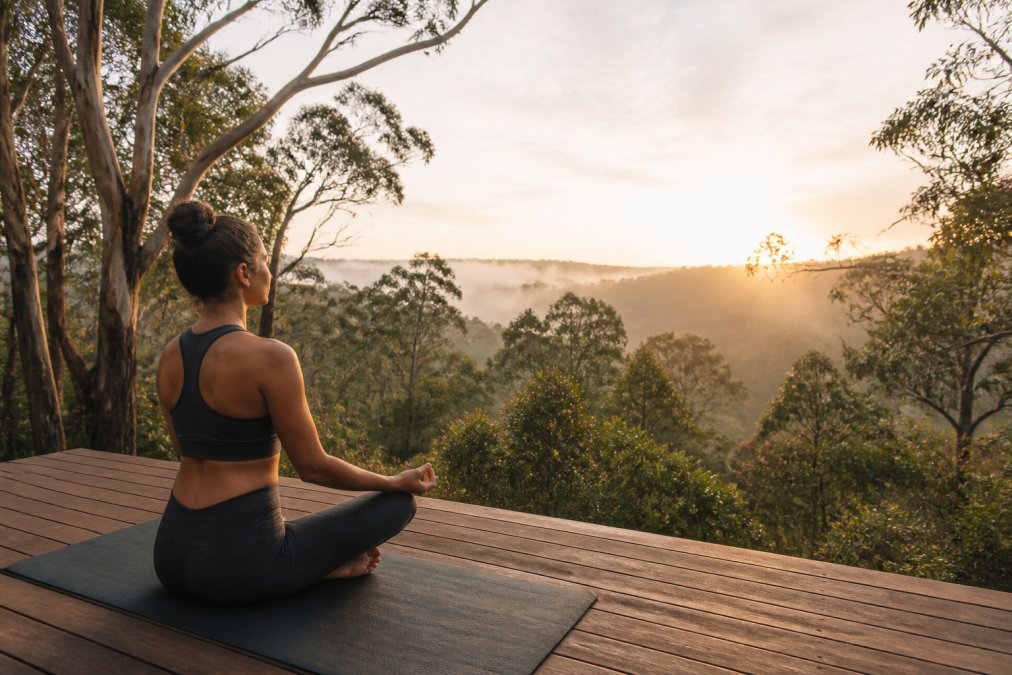
1. Harmony Hill Health Retreat: Exclusive Thermal Therapy in Tasmania
Our own retreat tops this list because it was designed for exactly the traveller this article is about. Harmony Hill Health Retreat welcomes only two to three guests at a time, so the entire programme bends around your needs rather than a group timetable.
2. Goddess Retreats: Women-Only Yoga and Surf Escapes
Goddess Retreats runs women-only programmes combining daily yoga, meditation and surfing with spa treatments and cultural activities, a strong option if you want female company and physical movement in equal measure. The main drawback is location: primary programmes require international travel, adding cost and logistics to an already significant commitment.
3. Kamalaya: Structured Wellness with Medical Oversight
Kamalaya offers personalised health consultations, detox and stress-management programmes, and thermal spa facilities in a secluded natural setting. It suits solo travellers who want a structured, medically informed experience rather than a purely holistic one, though expect a premium price point and a larger guest population than a boutique retreat.
4. Retreat in the Pines: Low-Pressure, Supportive Self-Care
Retreat in the Pines is a women-only centre focused on relaxed yoga, guided meditation and journaling in small groups. The deliberately gentle atmosphere suits first-time retreat goers, but retreats run on fixed dates, so flexibility is limited.
5. Bliss Sanctuary for Women: Fully Customisable Luxury
Bliss Sanctuary for Women builds itineraries around the individual guest, with unlimited spa treatments, private villa accommodation and dedicated hostesses. If you want luxury without a fixed group schedule, this is the model to look for, at a higher cost than group-based retreats.
6. Booking Platforms for Comparing Options
If you’re still in the research phase, directories such as BookRetreats and Care Retreats let you filter by solo-friendly criteria and read peer reviews before committing. Quality varies between listed providers, so treat these as a starting point rather than a guarantee.
Budget-Conscious Strategies for Solo Wellness Travel
A retreat doesn’t have to mean a five-figure outlay. The biggest savings come from timing, format and how you handle the single supplement.
Format is where the real money is saved.
- Shorter programmes, self-added rest: A three- or four-day structured retreat plus two self-directed rest days nearby can cost less than a seven-day all-inclusive programme while still giving your nervous system decompression time.
- Shared-room options: If a property offers a twin-share, take it, the savings can be substantial, and for some solo travellers the company is a feature, not a compromise.
- Day-retreat add-ons: Some centres let you book individual therapies or a single day of programming without staying overnight, useful if you’re already travelling and want to sample a modality before committing to a full week.
- Off-peak packages: Ask directly whether the operator has an unpublished shoulder-season rate. Small retreats would rather fill a date early at a modest discount than hold an empty room.
Ask whether the operator offers a payment plan or an early-booking rate. Many small retreats would rather fill a date early at a modest discount than hold an empty room, and this is rarely advertised on the website.
Budget-friendly formats worth knowing about:
- Volunteer-supported retreats: Some centres offer reduced rates in exchange for a few hours of daily help (kitchen, garden, reception). Not for everyone, but it can halve the cost.
- Teacher-training intensives: If you’re already a yoga or meditation practitioner, a training programme often costs less per day than a retreat and includes daily practice.
- Off-grid and self-catering: Properties that provide accommodation and a schedule but leave meals to you can be significantly cheaper, provided you’re happy to cook.
View Packages to see current availability and inclusions.
Post-Retreat Integration: Making the Benefits Last
The benefits of a retreat fade fastest when there’s no plan for the return. Post-retreat integration is the part most guests underestimate, and it’s the difference between a good week and a changed year.
The retreat creates the conditions for change. The habits you carry home are what make it permanent. Plan the first week back as carefully as you planned the retreat itself.
Accessibility and Inclusivity in Wellness Retreats
Physical accessibility. Ask specifically about:
-
Step-free access from the car park or drop-off point to your room, the dining area and the treatment rooms, not just the main entrance.
-
Whether bathrooms have grab rails, walk-in showers or shower chairs, and whether any rooms are specifically adapted.
-
The terrain between buildings: a property ‘nestled in the hills’ may involve steep paths, gravel or stairs not mentioned in the listing.
-
Whether mobility equipment can be hired locally and delivered to the property.
-
Can the daily schedule be modified if you need to skip a session or rest? (A rigid timetable is a red flag for anyone managing fatigue or pain.)
-
Are there quiet spaces away from group activities where you can decompress?
-
Is the environment low-stimulus, soft lighting, no strong fragrances, limited background noise, or lively and social by design?
-
Can meals be adjusted for sensory preferences, not just dietary requirements?
-
Will the operator put any of this in writing so you have a record?
A vague answer to any of these questions is not a ‘yes’. If an operator can’t describe their accessibility features specifically, assume they don’t have them, and ask for confirmation in writing before you pay a deposit.
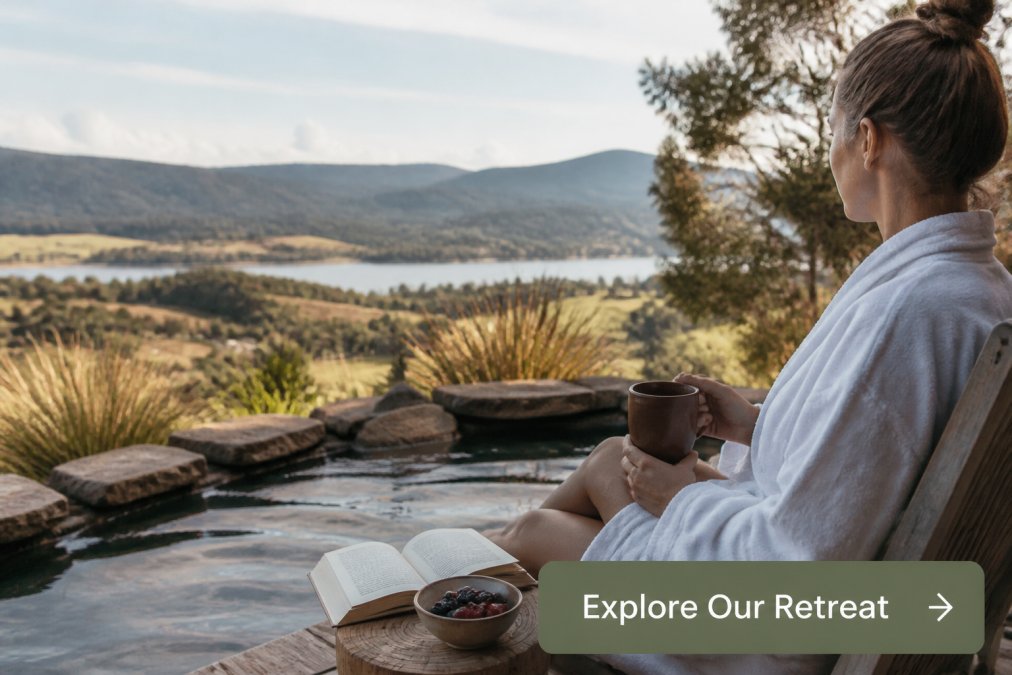
Explore Our Retreat to see how we accommodate individual needs.
Conclusion: Your Solo Wellness Journey Starts Here
The hardest part of solo wellness travel isn’t the booking, it’s believing you’re allowed to take the time. If you’re running on chronic fatigue and a schedule that never quite stops, a properly structured retreat isn’t indulgence, it’s maintenance.
Frequently Asked Questions
What should solo female travelers look for in a wellness retreat?
Look for women-only environments or small-group settings, clear safety protocols, and transparent cancellation policies. Check whether the retreat offers solo-friendly accommodations and dedicated support for guests travelling alone. Verify credentials of practitioners and read reviews from other solo female travelers. A retreat that limits guest numbers, like Harmony Hill Health Retreat which welcomes only two to three guests per week, often provides more personalised attention and a safer, more controlled environment.
Are there wellness retreats specifically designed for high-pressure leaders?
Yes. Some retreats cater specifically to executives and business leaders experiencing burnout. These programmes typically combine intensive therapies with privacy and minimal group interaction. Harmony Hill Health Retreat in Tasmania, for example, offers a bespoke 6-day Thermal Therapy Retreat designed for high-pressure leaders, focusing on mind-body detoxification and spiritual alignment. The small guest capacity ensures discretion and tailored support, which suits professionals who need to switch off completely.
How do I choose a safe and restorative wellness retreat?
Start by researching the retreat’s reputation and reading independent reviews. Confirm whether it operates in a safe location and has clear emergency procedures. Ask about staff qualifications and whether they have experience supporting solo female guests. A retreat with limited guest numbers, such as two to three per week, often provides a more secure and attentive environment. Also check that the programme aligns with your goals, whether that is stress relief, detox, or spiritual growth.
What is included in a luxury thermal therapy retreat?
Luxury thermal therapy retreats typically include a structured programme of heat and cold treatments, such as saunas, steam rooms, and hydrotherapy pools, combined with holistic practices like guided meditation, yoga, and nutritional guidance. Accommodation and meals are usually part of the package. Harmony Hill Health Retreat’s 6-day Thermal Therapy Retreat includes bespoke wellness activities rooted in ancient Egyptian teachings, designed to activate the body’s natural healing and promote deep relaxation.