

Table of Contents
- Why Standard Wellness Programs Fail Executives
- Executive Burnout Prevention: How Personalized Wellness Programs Address the Root Causes
- Stress Management for Executives: Personalization That Goes Beyond Generic Advice
- Building a Personalised Wellness Plan for Executives
- Step 1: Baseline assessment
- Step 2: Define the primary constraint
- Step 3: Select interventions that fit the constraint
- Step 4: Set a protected recovery period
- Step 5: Build the return plan
- Step 6: Measure and adjust
- Privacy and confidentiality: the question executives ask first
- Implementation roadmap
- What a Wellness Retreat for Executives Can Achieve That Daily Habits Cannot
- The Measurable Benefits: Productivity, Health, and Leadership Capacity
- Conclusion
- Frequently Asked Questions
Last Updated: October 14, 2026
Why Standard Wellness Programs Fail Executives
Generic wellness offerings rarely reach the people who need them most.
This guide from Harmony Hill Health Retreat examines the benefits of personalized wellness programs for executives, and why the standard model misses the mark.
The core issue is design.
Personalized wellness flips the sequence: it starts with an individual assessment, builds a plan around that person’s specific health risks and goals, and adjusts as their body responds.
Executive Burnout Prevention: How Personalized Wellness Programs Address the Root Causes
Executive burnout prevention works differently when the program is built around one person rather than a department. Burnout is not a scheduling problem you solve with a holiday.
Most workplace wellbeing initiatives target symptoms, mindfulness, a gym subsidy, a resilience webinar.
What most guides miss is that burnout prevention at this level requires removing the person from the environment that produced the condition.
Stress Management for Executives: Personalization That Goes Beyond Generic Advice
Stress management for executives fails when it is delivered as technique rather than treatment. Breathing exercises and cold showers are useful tools, not a plan.
Personalisation means the intervention matches the individual’s stress profile.
A practical way to think about it:
- Assessment first. Identify the specific health risks, not the general category.
- Match the modality. Thermal therapy, nutrition, movement, and rest work in different sequences for different people.
- Adjust continuously. The plan changes as the body responds.
- Protect the recovery window. No plan survives contact with a full inbox.
That last point is where most programs collapse. A leader who returns to the same demands within days undoes the progress; personalised programs that include genuine removal from the work environment produce outcomes daily habit changes alone rarely match.
Building a Personalised Wellness Plan for Executives
A personalised wellness plan for executives should follow a clear structure, but the structure is the easy part. The harder questions are which program type fits, who can see the health data it generates, and how the plan survives a full calendar.
Step 1: Baseline assessment
Establish current physical health, sleep quality, stress markers, and health goals. Without a baseline you cannot measure change, and without measurement the program is a feeling rather than an intervention. Use objective measures where you can, resting heart rate, blood pressure, sleep tracking, and self-reported measures where you cannot.
Step 2: Define the primary constraint
Identify the single biggest barrier to recovery, usually sleep, followed by sustained stress exposure. Naming one constraint keeps the plan focused; a plan that tries to fix everything fixes nothing.
Step 3: Select interventions that fit the constraint
Match the method to the problem rather than the trend. Most programs go wrong here, because the market’s distinct categories are not interchangeable.
|
Program type |
Best suited to |
Main limitation |
|---|---|---|
|
One-to-one coaching |
Behaviour change, accountability, habit formation |
Requires sustained engagement; effect fades without it |
|
Preventive health screening |
Identifying undetected risk early |
Identifies problems but does not resolve them |
|
Mental health support |
Acute stress, anxiety, burnout risk |
Access and confidentiality concerns deter senior uptake |
|
Fitness and movement |
Physical capacity, stress discharge |
Does not address sleep or sustained load |
|
Nutrition support |
Energy regulation, metabolic health |
Slow-acting; needs to fit real travel and meeting patterns |
|
Digital and app-based tools |
Convenience, tracking, low cost |
Low engagement; rarely sufficient alone |
|
Immersive residential programs |
Genuine removal from the stressor |
Requires a real block of time away |
The selection question is not which category is best, but which addresses the constraint from Step 2. For an executive whose primary constraint is sustained stress exposure, a digital tool will not touch it. For one whose constraint is poor nutrition on the road, a residential program may be overkill.
Step 4: Set a protected recovery period
Block time where work contact is genuinely suspended. This is the step executives resist most and benefit from most. A partial break, checking messages twice a day, is not a recovery window, just a lighter work week.
Step 5: Build the return plan
Decide in advance how the first two weeks back at work will differ from before. Most programs collapse here: a leader who returns to identical demands within days undoes the progress, and the effect fades faster than most expect.
Step 6: Measure and adjust
Track sleep, energy, and output against the baseline, then refine. Adjust the plan as the body responds rather than running a fixed curriculum to completion.
Privacy and confidentiality: the question executives ask first
Senior leaders are often more concerned about who sees their health data than about the program itself. That concern is reasonable and should shape program design from the start.
The governing principle is simple: individual health information should be held by the provider delivering care, not the employer. Employers should receive aggregate reporting only, participation rates, anonymised outcome trends, never individual results.
Under the Privacy Act 1988 and the Australian Privacy Principles, health information is sensitive information and attracts stricter handling requirements than ordinary personal data.
Implementation roadmap
Whether you build a program internally or choose one, the sequence is the same:
- Needs assessment. Survey or interview the executives involved. Identify the dominant constraint rather than assuming it.
- Program design. Match the intervention category to the constraint, and define the measurement set before launch.
- Provider selection. Assess clinical credentials, data governance, and whether the format suits senior leaders, small-group or one-to-one usually beats large-group.
- Launch and communication. Frame it around performance and capacity, not illness. Senior uptake depends heavily on how the program is positioned.
- Ongoing evaluation. Review the measurement set at fixed intervals and adjust. Report direction of change, not a single causal figure.
If you would rather step out of the environment entirely than build around it, Explore Our Retreat to see how an immersive program is structured.
What a Wellness Retreat for Executives Can Achieve That Daily Habits Cannot
A wellness retreat for executives delivers something daily habits structurally cannot: uninterrupted distance from the environment causing the problem.
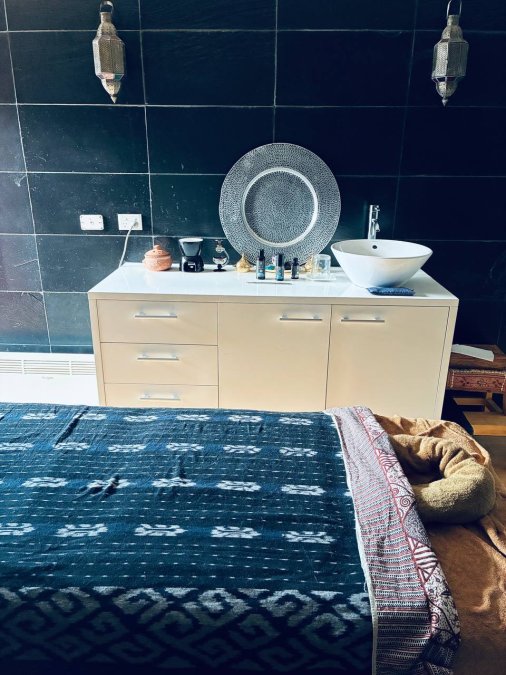
This is the case for an immersive reset. Harmony Hill Health Retreat hosts only two to three guests at a time in a private sanctuary, removing the group-program dynamic many senior leaders find counterproductive.
The exclusivity is deliberate. For leaders who want to explore the structure, you can review guidance on recovery and sleep from the Sleep Health Foundation and workplace mental health resources from Safe Work Australia to understand the principles behind immersive recovery.
The Measurable Benefits: Productivity, Health, and Leadership Capacity
The benefits of personalized wellness programs for executives are usually presented as a flat list, which is a problem: the evidence behind each claim is not equally strong, and treating them as interchangeable makes the whole case easier to dismiss. A more honest approach separates what is well supported from what is plausible but harder to prove. Distinguishing between these categories allows organizations to refine their expectations while implementing personalized wellness plans that address the specific physiological and professional demands faced by female leaders.
What the evidence supports, and how strongly
Physical health and chronic disease risk. This is the best-supported area.
Stress and mental health. Personalised stress interventions show consistent improvements in self-reported stress, sleep quality, and mood.
Productivity and work performance. The link between wellbeing programs and productivity is real but indirect, and most published claims overstate it.
Engagement, retention, and culture. These are downstream effects with a long causal chain. When senior leaders visibly participate and benefit, it changes what the organisation treats as acceptable.
How to measure outcomes without overstating them
Most programs fail at measurement because they track participation instead of outcomes. Participation tells you whether people showed up, not whether anything changed. A workable executive-level measurement set tracks four layers:
|
Layer |
What to track |
Why it matters |
|---|---|---|
|
Participation |
Uptake, completion, drop-off points |
Reveals whether the program is actually accessible |
|
Health indicators |
Sleep duration and quality, resting heart rate, blood pressure, energy ratings |
Objective where possible, self-reported where not |
|
Functional outcomes |
Decision quality, meeting load tolerance, sick days |
Closest proxy to leadership capacity |
|
Organisational |
Retention of senior staff, absenteeism, engagement scores |
Slow-moving, easily confounded |
The critical discipline is attribution. If retention improves in the same quarter a wellness program launches, that is not proof the program caused it. Track a baseline before launch, compare against a matched group where possible, and report direction of change rather than a single causal number.
The leadership-capacity angle competitors miss
The outcome that matters most for executives is rarely named in workplace-wellness content: decision quality under sustained load. A leader running on disrupted sleep and elevated stress does not simply feel worse. They make faster, narrower decisions, tolerate less ambiguity, and default to familiar patterns.
That is why the strongest case for personalisation is not comfort: generic programs cannot target the specific constraint, usually sleep architecture or sustained stress exposure, that degrades executive function. A program built around one person’s assessment can; one built for a population cannot.
Conclusion
The hardest part of executive wellness is not finding a program. It is accepting that the standard options were never designed for someone operating at your level of demand. Generic initiatives fail because they treat a physiological condition as a scheduling inconvenience.
Harmony Hill Health Retreat was built for exactly this problem. For those whose primary constraint is sustained stress exposure, our 5-Night Stress Release Retreat is designed around exactly that, while leaders carrying a heavier toxic load can look to our 6-Night Detox Retreat for a structured reset.
Frequently Asked Questions
What are the benefits of a wellness programme for executives?
A personalized wellness program for executives addresses the specific health risks of high-pressure leadership roles: chronic stress, sleep disruption, weakened immunity, and burnout. Unlike generic workplace wellbeing initiatives, these programs are built around the executive’s individual needs, health goals, and schedule. Benefits include improved physical health, better stress management, sharper decision-making, stronger work-life balance, and reduced absenteeism. When a program is truly personalized, it also supports leadership wellbeing and can lower long-term health risks, which matters for both the individual and the organisation.
How can a personalised wellness programme help prevent executive burnout?
Executive burnout prevention starts with recognising that burnout is not a lack of resilience; it is the result of prolonged stress without adequate recovery. A personalised wellness plan for executives identifies the specific stressors and health gaps unique to that leader, then builds targeted interventions such as stress reduction techniques, physical activity, nutrition adjustments, and structured rest. By addressing root causes rather than surface symptoms, these programs help executives move out of survival mode and rebuild the capacity to lead effectively without sacrificing their health.
How long does it take to see benefits from a wellness programme?
Some benefits, such as reduced stress and better sleep, can appear within the first week of an intensive retreat. Others, like improved physical health, resilience, and sustained work performance, develop over weeks and months of consistent practice. A personalized wellness plan for executives typically includes an initial assessment, a focused reset period, and ongoing support. The timeline depends on the individual’s starting point, the depth of the program, and how well the new habits are integrated into daily life after the program ends.
What is the difference between an employee wellness programme and an executive wellness programme?
Employee wellness programs often focus on broad participation, offering general health screenings, fitness classes, or mental health resources to a wide workforce. An executive wellness programme is more intensive and private, designed for leaders who face unique pressures: high-stakes decisions, isolation, and limited time. These programs prioritise confidentiality, personalised interventions, and outcomes like leadership wellbeing, stress management for executives, and executive burnout prevention. They are typically smaller in scale and tailored to the individual rather than the group.