Table of Contents
- Why High-Pressure Leaders Are Turning to Stress Retreats
- Burnout Recovery Programs: What Actually Works
- Thermal Therapy Benefits for Stress: Science and Practice
- Luxury Wellness Retreat Duration: How Long Should You Stay?
- What to Expect During Your Stay
- Choosing the Right Stress Retreat for Your Needs
- Making Your Reset Last: Pre-Retreat Preparation and Post-Retreat Integration
- Frequently Asked Questions
Last Updated: September 18, 2026
Why High-Pressure Leaders Are Turning to Stress Retreats
Chronic stress, sleep disruption, and weakened immunity have become the default state for high-pressure leaders. Standard wellness interventions, meditation apps, spa trips, company EAPs, address symptoms without touching the root cause: survival-mode living baked into daily routines.
A dedicated stress retreat Australia differs fundamentally from a regular holiday. A proper stress retreat isn’t about pampering; it’s about cellular reset through duration, intensity, and deliberate combination of thermal therapy, mindfulness, and holistic healing modalities designed for nervous system de-escalation.
A six-day immersion creates conditions for genuine transformation, away from email and decision fatigue. A retreat welcoming only two to three guests removes the social performance aspect that undermines genuine rest.
Burnout Recovery Programs: What Actually Works
Burnout recovery programs fall into two categories: surface-level wellness and transformative reset. The distinction matters because what looks similar on the surface often delivers vastly different outcomes.
Surface-level programs focus on stress management techniques and occasional meditation, but ask the nervous system to regulate itself while remaining in the same high-pressure environment.
Transformative programs remove the person from the stressor environment and provide intensive support across physical detoxification, emotional processing, nervous system recalibration, and skill-building for sustainable change. Programs like the 5-Night Stress Release Retreat are specifically designed to address this gap, combining structured healing protocols with the duration needed for genuine nervous system recalibration.
Effective burnout recovery addresses the body’s stress response (thermal therapy, massage, movement), the mind’s patterns (meditation, mindfulness), and spiritual alignment (purpose, solitude, reflection), not mental health alone.
The real recovery happens in the gap between rest and re-engagement. A week of complete disconnection followed by intentional integration practices creates lasting change. Without the integration phase, most leaders drift back into old patterns within weeks.
Thermal Therapy Benefits for Stress: Science and Practice
Thermal therapy activates the parasympathetic nervous system, the physiological opposite of stress. Immersion in warm mineral-rich water lowers heart rate and blood pressure, shifting the nervous system from defensive to restorative mode.
Thermal immersion supports muscle recovery, improves circulation, reduces inflammation, and enhances immune function, measurable benefits for stress-related tension and immune suppression.
Natural thermal waters contain magnesium, silica, and other minerals that support cellular function. Egyptian, Japanese, Roman, and indigenous Australian traditions all recognized the restorative power of warm mineral water.
Thermal therapy at a dedicated retreat provides consistent mineral composition and the psychological benefit of a dedicated healing space, signaling to the nervous system that recovery is prioritised.
Luxury Wellness Retreat Duration: How Long Should You Stay?
The ideal duration for a stress retreat depends on three factors: the depth of your burnout, your recovery capacity, and your ability to sustain integration afterward. Meaningful transformation requires a minimum threshold of immersion, but the right duration varies significantly by individual.
Two to three days (weekend retreat): Provides temporary relief but insufficient time for deep nervous system recalibration. Benefits typically fade within 1-2 weeks without structural support for lasting change.
Five to six days (optimal window): By day three or four, genuine nervous system recalibration becomes possible. Sleep improves, mental fog clears, and emotional processing becomes accessible. This duration allows initial detoxification (days 1-2), deepening (days 3-4), and integration (days 5-6).
Seven to ten days (extended immersion): Offers additional depth for severe burnout, chronic health conditions, or multiple burnout cycles. Extended retreats allow deeper emotional processing, more extensive detoxification, and personalised therapeutic work.
Assessing your personal threshold: Consider burnout severity (early-stage vs. advanced), recovery capacity (can you fully disconnect?), integration readiness (will you maintain new practices?), and previous retreat experience (first-timers often need longer).
A two-to-three-guest model accelerates healing through personalised attention and absence of social performance pressure.
The real recovery happens not during the retreat but in the integration phase afterward. Duration matters, but integration matters more.
What to Expect During Your Stay
A stress retreat Australia structured around thermal therapy and holistic healing follows a deliberate rhythm designed to support nervous system recovery and cellular detoxification.
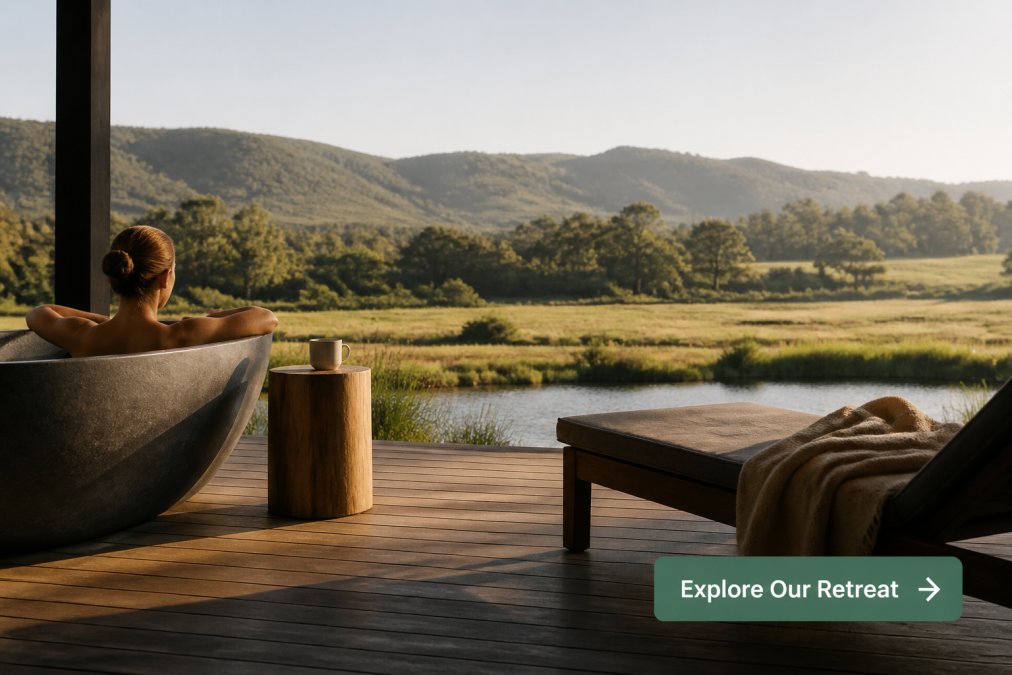
Days begin with gentle movement, yoga, or nature walks, transitioning into thermal immersion in magnesium-rich pools that support muscle relaxation and parasympathetic activation.

Afternoons typically include therapeutic massage, hydrotherapy sessions, and holistic treatments tailored to your specific needs. This is when the physical detoxification deepens. The combination of heat, movement, and skilled therapeutic touch releases stored tension and supports the body’s natural healing processes.
Meditation and Mindfulness Practices
Meditation forms the foundation of nervous system recalibration. A retreat environment allows 30-60 minutes of guided meditation in a dedicated space, free from interruptions that fragment attention in daily life.
Mindfulness practices extend beyond formal meditation to walking meditation, mindful eating, and conscious breathing, developing the capacity to observe stress responses without reacting.
Holistic Healing Modalities
A comprehensive retreat incorporates multiple healing approaches, energy work, sound therapy, herbal medicine, rooted in ancient wisdom traditions, addressing the whole person.
Organic nutrition and whole foods support the body’s natural healing capacity, producing noticeable improvement in energy and mental clarity.
The spiritual dimension matters for leaders seeking alignment and purpose, creating space for deeper questions about meaning and how to live.
Choosing the Right Stress Retreat for Your Needs
Not all stress retreats deliver equivalent outcomes. The distinction between a luxury spa getaway, a clinical mental health retreat, and a holistic wellness reset is crucial, and it’s worth understanding what differentiates them before committing your time and resources.
Spa retreats: Comfort and temporary relief. A luxury spa retreat prioritises comfort and aesthetic experience but without structured nervous system recalibration, benefits fade within 1-3 weeks. Works as maintenance for those already managing stress, but rarely produces lasting change for active burnout.
Clinical mental health retreats: Therapeutic intervention for diagnosed conditions. Designed for diagnosed anxiety, depression, PTSD, or acute crises with psychiatric oversight.
How to assess retreat quality: Key questions to ask.
Before committing, ask:
- Therapeutic model: Can they explain why thermal therapy works and how meditation recalibrates the nervous system? Vague language is a red flag.
- Staff qualifications: A two-to-three-guest model with qualified practitioners is beneficial.
- Pre-retreat assessment: Quality retreats conduct pre-arrival consultations to personalise the program.
- Post-retreat support: Ask about personalised integration plans, follow-up coaching, and community support. No post-retreat structure means betting on willpower, not success.
- Outcome measurement:
- Daily structure: Request a sample itinerary. Does it balance activity with rest and solitude?
- Environment: Is it in nature with genuine disconnection (no WiFi), or urban with semi-connection? Your nervous system needs genuine separation from work triggers.
Red flags to watch for:
- Promises of “complete healing” or “permanent transformation” in a short timeframe. Genuine change is possible, but it requires post-retreat integration.
- No mention of nervous system science or therapeutic framework. If they can’t explain why their approach works, they may not understand it themselves.
- Pressure to commit without a pre-retreat conversation. Quality retreats invest time in understanding your needs before you arrive.
- Testimonials only, no data. Personal stories are valuable.
- No post-retreat support. If they’re not invested in your success after you leave, they’re not invested in lasting change.
Matching your needs to the right retreat type:
- If burnout is your primary concern: Prioritise holistic wellness retreats with proven nervous system recalibration protocols, thermal therapy, and structured post-retreat integration. Avoid spa retreats (too superficial) and clinical retreats (unless you have a diagnosed condition).
- If you’re seeking spiritual alignment or purpose clarity: Look for programs rooted in contemplative tradition, with time for solitude and reflection, and facilitators trained in existential or transpersonal work.
- If physical restoration matters most: Thermal therapy and hydrotherapy should be central. Ensure the retreat includes skilled massage, movement practices, and nutritional support.
- If you have a diagnosed mental health condition: Seek clinical retreats with psychiatric or psychological oversight, or holistic retreats that explicitly partner with mental health professionals.
- If you’re a solo traveler: Prioritise retreats with small group sizes (two to three guests) or private programs. Confirm the social atmosphere, some retreats encourage community; others prioritise solitude. Ask how solo travelers are supported and whether you’ll feel isolated or integrated.
The best stress retreat for you aligns your specific needs with the program’s core strengths and includes three non-negotiables: (1) a clear therapeutic framework you understand, (2) personalised pre-retreat assessment and programming, and (3) structured post-retreat integration support. Without all three, even a beautiful retreat will produce temporary relief rather than lasting change.
Making Your Reset Last: Pre-Retreat Preparation and Post-Retreat Integration
The most common reason retreat benefits fade is the absence of intentional integration. You return to the same environment, the same role, the same patterns, and within weeks, old habits reassert themselves. The retreat becomes a pleasant memory rather than a catalyst for lasting change.
Frequently Asked Questions
How is a stress retreat in Australia different from a weekend spa trip or meditation app?
A stress retreat provides immersive, multi-day mind-body detoxification away from daily triggers. Unlike weekend spa visits, a retreat creates sustained mental de-escalation through thermal therapy, guided meditation, and holistic healing practices. The extended duration allows your nervous system to genuinely reset, not just temporarily relax. Meditation apps lack the therapeutic environment and personalised guidance that transforms burnout into lasting wellbeing.
What are the benefits of thermal therapy for stress management?
Thermal therapy uses heat and mineral-rich water to activate the body’s natural healing response. Magnesium absorption through thermal immersion reduces cortisol levels and eases muscle tension. Regular thermal sessions during a retreat lower anxiety, improve sleep quality, and restore immune function, all compromised by chronic stress. The cumulative effect over multiple days creates cellular detoxification that day visits cannot achieve.
How long should a luxury wellness retreat last to actually work?
A 6-day retreat allows sufficient time for your nervous system to shift from survival mode to restoration. The first two days address acute stress symptoms; days three to five facilitate deep cellular healing and emotional release; the final day integrates insights for sustainable change. Shorter retreats may feel restorative temporarily, but longer durations enable lasting transformation in stress resilience and mental clarity.
Will the benefits of a stress retreat actually stick after I return to my high-pressure role?
Integration is key. Pre-retreat preparation, clarifying your stress triggers and setting intentions, and post-retreat practices, journaling, meditation schedules, boundary-setting at work, anchor the transformation. Many retreats provide post-stay support to help you maintain the reset. The practices during thermal therapy and mindfulness can create a genuine shift in how you respond to pressure, not just temporary relief.