
Table of Contents
- Why High Performers Are Choosing a Health Retreat in Australia
- Burnout Recovery Programs: What Actually Works
- Stress Management Retreat Packages: Matching Your Needs to the Right Program
- Inside a Luxury Wellness Sanctuary: Therapies That Drive Real Change
- Budget-Friendly vs Luxury Health Retreats: Finding Your Fit
- Seasonal Timing and Logistics: When to Go and How to Prepare
- Frequently Asked Questions
Last Updated: September 11, 2026
Why High Performers Are Choosing a Health Retreat in Australia
A health retreat in Australia is a residential wellness program that combines therapeutic treatments, structured rest and nutritional support to help guests recover from chronic stress and burnout. Demand has grown sharply as senior leaders look beyond weekend spa breaks toward deeper, more clinical resets.
This guide from Harmony Hill Health Retreat examines what separates a genuine recovery program from a glorified holiday, how to match a retreat to your specific health needs, and what to expect from a six-day intensive.
Safe Work Australia’s national guidance on work-related psychological health
The Burnout Epidemic Among Australian Leaders
Executive burnout rarely announces itself as exhaustion. It shows up as fractured sleep, stalled decision-making and a body that catches every infection going around the office.
What most guides miss is that the standard remedies, a long weekend, a meditation subscription, a few early nights, treat symptoms rather than the accumulated load. The nervous system needs sustained downtime to shift out of survival mode, and that takes days, not hours.
Burnout Recovery Programs: What Actually Works
Most retreat write-ups describe burnout recovery in the same vague terms: step away, rest, eat well, return refreshed. That advice is not wrong, but it is useless for someone trying to decide between a two-night reset and a five-night clinical-style program. What actually separates a program that works from one that does not comes down to four design decisions.
The Four Design Decisions That Separate Real Recovery From a Spa Break
1. Duration matched to nervous-system load. A common pattern practitioners observe is that the body needs roughly 48 to 72 hours just to downshift out of a chronic stress response before deeper therapeutic work becomes productive. A two-night stay is largely decompression. A five-night stay is the shortest format that reliably fits decompression, active treatment and reintegration into one arc.
2. A sequenced treatment plan, not a menu. Effective programs order therapies deliberately: gentle circulatory work first, deeper bodywork once the body has settled, thermal and detox therapies in the middle, and lighter integration sessions toward the end. Programs that let guests pick treatments at random tend to produce a pleasant week rather than a measurable shift.
3. Genuine removal from daily stressors. This is the part most self-directed attempts get wrong. Keeping your phone on, checking email between treatments, or staying somewhere you can still be reached means the nervous system never fully commits to recovery. Programs that build in a clear handover protocol outperform those that simply ask guests to ‘switch off’.
4. Psychological rest alongside physical treatment. Beyond Blue’s resources on stress and mental wellbeing notes that sustained recovery depends on both rest and deliberate practice. That is why the strongest programs pair bodywork with quiet time, journalling, breathwork or counselling rather than treating the body in isolation.
Why Five Nights Is the Practical Sweet Spot
A structured five-night program gives each of those four decisions room to unfold without demanding more leave than most working professionals can take. It is long enough for the decompression phase, the treatment phase and at least one full day of integration, and short enough that you can return to work without a second week of catch-up.
At Harmony Hill Health Retreat, the five-night Stress Release Retreat is built around exactly this sequence, pairing daily bodywork with thermal therapy and protected quiet time. You can review the five-night stress release program to see how the days are structured.
The first 48 hours of any retreat are usually the hardest. Sleep often worsens before it improves as the body finally relaxes. Guests who know this in advance ride it out instead of panicking and cutting the program short.
Matching Your Goal to the Right Format
Different goals need different program shapes. Use this as a rough filter before you book:
| Your primary goal | What to look for | Minimum useful duration |
|---|---|---|
| Early warning signs of stress | Rest, light bodywork, low structure | 2-3 nights |
| Persistent stress, poor sleep | Sequenced bodywork, thermal therapy, quiet time | 5 nights |
| Severe burnout or chronic fatigue | Deep detox, daily treatment, clinical oversight | 5-6 nights |
| Digital detox | No-device policy, single point of contact, low guest numbers | 5 nights |
If you are unsure which column you fall into, the honest answer is usually one tier higher than you think. Most guests who book a weekend reset and then extend on arrival were already past the early-warning stage. luxury chauffeur services.
[CTA: Explore Our Retreat]
Stress Management Retreat Packages: Matching Your Needs to the Right Program
Stress management retreat packages fall into three broad categories, and choosing the wrong one wastes both time and money.
| Program Type | Best For | Typical Duration | Core Focus |
|---|---|---|---|
| Weekend reset | Early warning signs | 2-3 nights | Rest, light bodywork |
| Five-night stress release | Persistent stress, poor sleep | 5 nights | Full therapeutic program |
| Six-night thermal intensive | Severe burnout, chronic fatigue | 6 nights | Deep detox and reset |
The five-night format suits most professionals. It is long enough to produce a genuine shift and short enough to fit around a demanding calendar.
At Harmony Hill Health Retreat, the five-night Stress Release Retreat pairs daily bodywork with thermal therapy and quiet time, and it remains the most requested option among guests who need to return to work functioning properly. You can review the five-night stress release program to see how the days are structured.
Inside a Luxury Wellness Sanctuary: Therapies That Drive Real Change
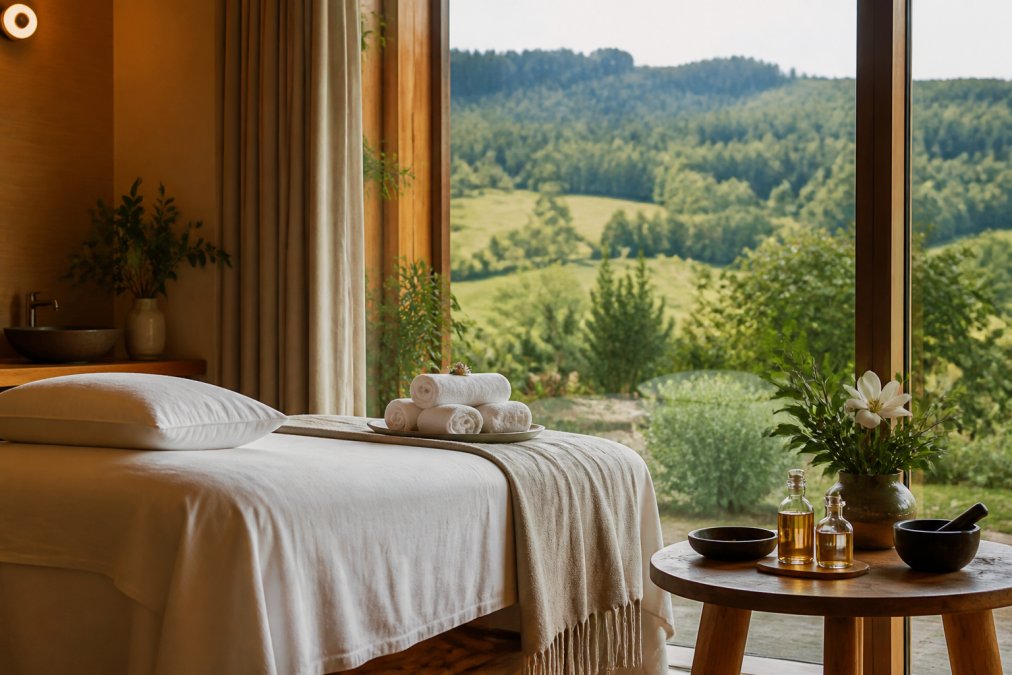
A luxury wellness sanctuary is defined less by its fittings than by the calibre of its therapeutic program. Treatment quality, practitioner skill and the rhythm of the day matter more than thread count.
Signature Treatments That Define the Experience
The treatments below form the backbone of a serious restorative program, and each targets a different layer of stress:
- Ayurveda salt treatment: mineral-rich salt draws out tension and supports circulation
- Whole body remedial massage: works through chronic muscular holding patterns
- Detox herbal Moxa therapy: warmth and herbs combine to support deep tissue release
- Chakra Healing therapy: hot stone massage and organic facial restore calm to the nervous system
- Detox body scrub and mud in steam capsules: exfoliation and heat support the body’s own elimination pathways
The Science Behind Thermal Therapy and Detoxification
Heat exposure triggers vasodilation and sweating, which supports circulation and gives the lymphatic system a nudge. The effect is cumulative, which is why thermal work is spread across several days rather than concentrated into one session.
Anyone with cardiovascular conditions, uncontrolled blood pressure or pregnancy should get medical clearance before thermal therapy. Skipping this step is the fastest way to turn a restorative week into a medical event.
Budget-Friendly vs Luxury Health Retreats: Finding Your Fit
The honest answer is that price tracks intensity and privacy, not effort. Lower-cost group retreats deliver solid value if you can handle shared facilities and a fixed schedule.
Luxury formats buy you three things: a bespoke program built around your health assessment, low guest numbers, and the discretion to rest without performing wellness for a group. For a leader who cannot switch off in company, that privacy is the entire point.
Harmony Hill Health Retreat takes only two to three guests at a time, which is why guests describe the experience as a private reset rather than a group holiday.
Senior leaders and business owners who need genuine privacy and a program built around their specific health picture, not a shared timetable.
Seasonal Timing and Logistics: When to Go and How to Prepare
Most retreat guides skip straight from ‘book now’ to ‘pack your bags’. In practice, two factors decide whether a program lands well: when you go, and how easily you can actually get there and settle in.
Choosing Your Season
Timing affects both the quality of your rest and the availability of the program you want.
- Summer (December to February): Peak domestic travel period. Retreat availability tightens, transport and accommodation fill early, and heat can make thermal therapies less appealing. Book well ahead if this is your only window.
- Autumn (March to May): Often the most comfortable window for restorative programs. Milder temperatures suit thermal and outdoor elements, and availability is generally better than summer.
- Winter (June to August): Cooler conditions pair well with thermal therapy, steam and heated treatment rooms. Fewer domestic travellers means quieter properties and easier booking.
- Spring (September to November): Warming weather, good availability, and a natural fit for programs focused on resetting routines before the end-of-year push.
A practical rule: book outside your own peak business periods so you are not fielding calls during treatment hours, and aim for a window where you can take a further two to three days off after returning. Arriving straight from a packed week and flying out the morning after your final session undoes much of the benefit.
Tourism Australia’s guidance on planning domestic wellness travel is a useful starting point for seasonal conditions if you are travelling interstate.
Getting There: Transport and Accessibility
Logistics are where most retreat guides go quiet, and where guests most often get caught out.
- From major airports: Most retreats sit a one to three hour drive from the nearest capital-city airport. If you are flying in, arrange a private transfer or pre-booked car rather than relying on rideshare, which is unreliable in regional areas.
- Driving yourself: Avoid long drives on arrival day. Fatigue plus an unfamiliar route is a poor start to a rest program. If you must drive, arrive a day early and stay nearby.
- Accessibility: If you have limited mobility, confirm in writing before booking whether treatment rooms, dining areas and accommodation are step-free, whether bathrooms have grab rails, and whether transfers can accommodate mobility aids. Not all retreats are set up for this, and it is better to know before you pay.
- Medical proximity: Ask how far the property is from the nearest hospital or medical centre, particularly if you have any cardiovascular condition, uncontrolled blood pressure or are pregnant, since thermal therapies require clearance.
Pre-Departure Checklist
- Hand over decision-making authority in writing
- Set an out-of-office that names a single point of contact
- Confirm transfer arrangements and arrival time with the retreat
- Confirm accessibility needs in writing if applicable
- Pack loose clothing, swimwear and comfortable walking shoes
- Complete any health questionnaire honestly, including medications
- Arrange transport so you are not driving long distances on arrival day
Anyone with cardiovascular conditions, uncontrolled blood pressure or pregnancy should get medical clearance before thermal therapy. Skipping this step is the fastest way to turn a restorative week into a medical event.
[CTA: View Packages]
Frequently Asked Questions
Are health retreats worth it for busy executives?
For leaders experiencing burnout, a structured health retreat delivers benefits that a regular holiday cannot. The combination of therapeutic treatments, digital disconnection, and professional guidance creates space for genuine nervous system recovery. Programs like burnout recovery programs are designed specifically for high-pressure professionals who need more than rest alone. The key is choosing a retreat with a clear methodology, qualified practitioners, and follow-up support so results last beyond the stay.
How does a 5-night stress management retreat package compare to shorter wellness breaks?
Weekend breaks typically scratch the surface because the body needs several days to shift out of chronic stress mode. A five-night stress management retreat package allows time for deep restorative work: therapeutic massage, detoxification therapies, mindfulness practice, and sleep repair. Guests often report that days three and four bring the most significant mental clarity. Shorter stays can help, but they rarely produce the sustained reset that longer programs achieve.
What should I look for in a high-end wellness sanctuary?
Prioritise small group sizes, qualified practitioners, and a clear therapeutic philosophy. Look for facilities that offer mineral springs, therapeutic massage, bodywork, and natural therapies under one roof. Check whether the program includes a health assessment and personalised nutrition plan. Exclusivity matters because personalised attention drives outcomes. Also confirm the retreat provides practical tools you can use after you leave, not just a pleasant week away.
How do holistic therapies like Moxa and Ayurveda support detoxification?
Detox herbal Moxa therapy uses gentle heat to stimulate circulation and support the body’s natural elimination pathways. Ayurveda salt treatments draw out impurities while replenishing minerals. Combined with detox body scrubs and steam capsule sessions, these therapies encourage lymphatic drainage and cellular detoxification. The goal is not a harsh cleanse but a supported release that leaves you feeling lighter, clearer, and more energised.
Burnout does not resolve on its own, and another long weekend will not shift it. Harmony Hill Health Retreat offers a bespoke five-night Stress Release Retreat built around Ayurveda salt treatment, whole body remedial massage, Detox herbal Moxa therapy, Chakra Healing therapy, and a detox body scrub and mud in steam capsules, limited to two to three guests at a time.
Book Your Stay and give your body the conditions it needs to reset properly.